A practical, experience-based guide to planning a Southern Italy trip
Southern Italy is not a place you rush.
It’s a region best experienced slowly — through long lunches, coastal drives, evening walks, and small towns where life still follows its own rhythm.
The south rewards travellers who leave space in their southern Italy itinerary, and allow the journey itself to shape the experience.
Southern Italy is incredibly diverse, from the beaches of Calabria and Puglia to the historic towns of Sicily, Campania, and Basilicata. This guide will help you plan your itinerary, choose the best regions to visit, and decide how much time to spend in each area.
If you’re looking for a broader introduction to the regions, culture, and character of the south, start with my Southern Italy Travel Guide before returning here to plan your route.
This guide is designed to help you plan a realistic 7–14+ days Southern Italy trip that balances culture, food, beaches, and travel time. It’s based on how people actually move through the south — not on trying to see everything at once.
Whether you’re visiting for the first time or returning to explore more deeply, these itineraries combine some of the most rewarding places in Southern Italy into one flexible route.
Explore Southern Italy by Region
Each region of Southern Italy offers something different, from coastal road trips and beaches to mountain villages, food experiences, and historic towns.
🧭 Quick Overview
7 Days
Naples (Campania) → Amalfi Coast → Matera (Basilicata) → Puglia → Tropea (Calabria)
10 Days
Add the Cilento Coast and spend more time in Puglia or Calabria.
14 Days
Extend into eastern Sicily or explore Calabria more deeply, including Scilla, Reggio Calabria, and the Sila mountains.
Best Time to Visit
April–June and September–October for warm weather, fewer crowds, and comfortable travel conditions.
🧳 Travel Styles
- Car-free: Base in Naples + Amalfi + Matera by train/ferry/bus.
- Road-trip: Rent from Matera—remember to park outside ZTLs.
- Beach first: Add extra days in Tropea or Sicily’s Ionian coast.
- History buff: Extra day in Paestum and Matera’s cave churches.
Best Way to Travel
Trains and ferries work well in Campania and Puglia. A rental car becomes more useful in Calabria and rural areas.
👥 Who This Southern Italy Trip Is Best For
This itinerary is ideal for:
- First-time visitors to Southern Italy
- Travellers wanting a balance of beaches, culture, and food
- Couples, solo travellers, and slower-paced explorers
- People who value quality of experience over rushing between destinations
If your main goal is nightlife or rapid sightseeing, this route may feel too relaxed. If your goal is to understand Southern Italy rather than just see it, you’re in the right place.
And if you’re still deciding where to include in your itinerary, my guide to the best cities and towns in South Italy covers 37 destinations across Calabria, Puglia, Campania, Sicily, and Basilicata.
🗺️ The Classic 7-Day Southern Italy Itinerary
Day 1 — Naples
Naples is intense, layered, and essential. Walk the historic centre, eat pizza where it was invented, and don’t rush it.
Walk through the Centro Storico, visit a local café, and avoid trying to see too much in one day.
Day 2 — Amalfi Coast
Travel south to the Amalfi Coast. Rather than attempting to visit every town, focus on one or two places such as Positano, Amalfi, or Ravello.
The Amalfi Coast is best experienced slowly — through coastal walks, sea views, and long lunches rather than rushing between viewpoints.
Day 3 — Amalfi Coast to Matera
Leave the coastline behind and head inland to Matera, one of the most extraordinary cities in Italy.
Arrive in the afternoon and explore the ancient cave districts as the light begins to soften. Matera becomes especially atmospheric in the evening.
Day 4 — Matera to Puglia
Continue east toward Puglia and the Adriatic coast.
You can stop in Alberobello before basing yourself in towns such as Polignano a Mare, Monopoli, or Ostuni.
This part of the trip shifts into a slower rhythm centred around whitewashed towns, local food, and coastal scenery.
Day 5 — Explore Puglia
Spend the day exploring Puglia’s towns and coastline.
Depending on your pace, you might visit:
- Ostuni
- Monopoli
- Lecce
- Polignano a Mare
Puglia is less about landmarks and more about atmosphere, food culture, and relaxed coastal living. See my ‘How to get to Puglia‘ guide for detailed transport information.
Day 6 — Puglia to Calabria
Travel south toward Calabria.
This is one of the longer travel days, but it also marks a noticeable shift away from heavily visited tourist regions into a quieter and more authentic part of Southern Italy.
Whenever we take this route, we break the drive with coastal stops along the way.
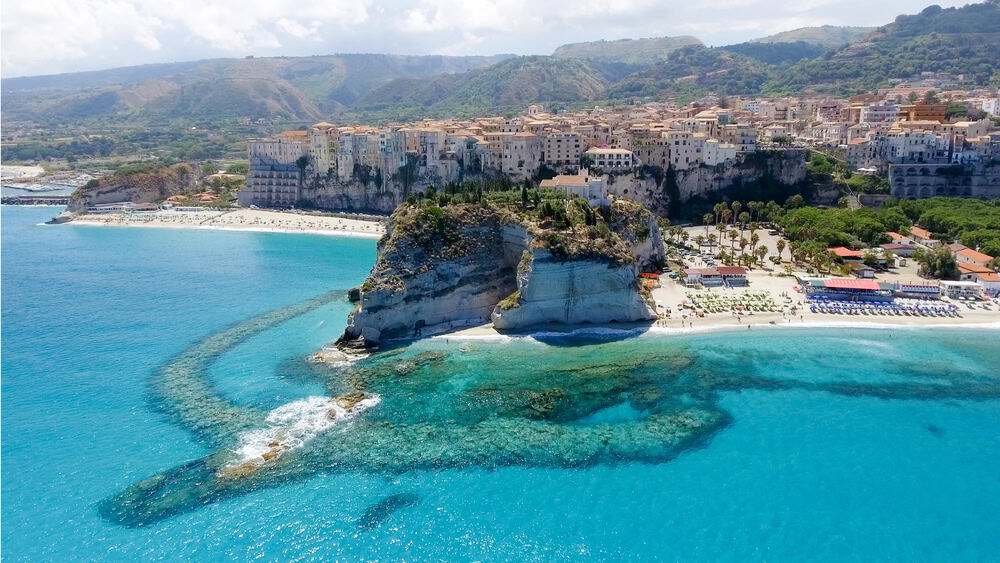
Day 7 — Tropea
End your trip in Tropea, one of Southern Italy’s most spectacular coastal towns.
Spend the day swimming, walking through the old town, enjoying seafood by the water, and slowing down completely before departure.
Tropea captures much of what makes Southern Italy special — dramatic scenery, strong local identity, and a pace of life that still feels connected to the Mediterranean.
🚗 Extending Your Southern Italy Trip
10-Day Itinerary
With 10 days, you can slow the pace and add a few extra destinations without rushing.
Good additions include:
- The Cilento Coast south of Naples
- An extra day in Puglia
- More time exploring Calabria’s coastline
You could also include:
- Pizzo
- Capo Vaticano
- Paestum’s Greek temples
This creates a more balanced journey with fewer long travel days.
Then at the end of 7-10 days, fly home or onwards from Lamezia Terme International Airport or Bari Airport.
🌅 14-Day Southern Italy Itinerary
With two weeks, you can either continue into Sicily or explore Calabria more deeply.
From my own experience, I have found trying to do both usually means moving too fast, so plan carefully so as not to feel rushed. Its a holiday afterall.
Option 1 :
Days 11–13: Sicily’s East – This route combines beaches, baroque towns, volcanic landscapes, and Sicily’s distinct culture.
Add:
- Taormina (Greek Ampi-theatre)
- Mount Etna (Drive / Tour)
- Siracusa (Ortega Island / Harbour nightlife)
- Noto ( Baroque Architecture)
- Scicli (Church and Municipio)
Day 14: Fly home from Catania or Reggio Calabria.
Option 2 — Deeper Calabria
Spend more time discovering:
- Scilla
- Reggio Calabria
- Sila National Park
- Smaller coastal villages along the Costa degli Dei (Coast of the Gods)
☀️ Best Time to Visit Southern Italy
| Season | Weather & Crowds | My Take |
|---|---|---|
| Apr–Jun | 22–30 °C, flowers, calm seas | My absolute favourite! —warm, local life in full swing. |
| Jul–Aug | 30 + °C, busy, expensive, avoid if possible | Still ok if you plan early and drive early. |
| Sep–Oct | 24–28 °C, sea still warm | Perfect mix of great weather, cheaper stays, harvest vibe. |
| Nov–Mar | 10–18 °C, quiet | Cities & food lovers’ season; beaches for napping only! Too cold to swim. |
Spring (April–June)
Spring is one of the best times to visit Southern Italy. Temperatures are comfortable, towns feel alive without being overcrowded, and the landscapes are still green from winter rains.
Summer (July–August)
Summer brings vibrant coastal energy but also higher temperatures and larger crowds, especially along the Amalfi Coast and in popular beach towns.
If travelling in peak season, book accommodation early and plan drives outside the hottest part of the day.
PLEASE NOTE: While Southern Italy is beautiful year-round, August is probably the one month I would try to avoid if possible. August is when nearly all Italians take their vacation and apart from tourism related activities industry, office workers, Schools etc. are closed.
Between the extreme summer heat, peak tourist crowds, inflated prices, and heavy traffic in popular coastal areas, travelling during this period can quickly become exhausting.
Many destinations that normally feel charming and authentic can lose some of that atmosphere during August simply because they become so busy. For a more comfortable and enjoyable trip, I generally recommend travelling in late spring or early autumn instead.
Autumn (September–October)
For many travellers, autumn is the ideal season.
The sea remains warm, crowds ease, and Southern Italy’s food culture becomes even more rewarding during harvest season.
This is also when we harvest the Olives and produce olive oil. (Olive tree harvesting and Olive oil prouction article and video coming soon, stay tuned!)
Winter (November–March)
Winter is quieter and more local.
While some beach towns slow down considerably, cities like Naples remain lively and atmospheric throughout the colder months.
Getting to and around Southern Italy
Most travellers arrive via plane to:
- Rome or Naples – the most practical gateway
- Bari – ideal for Puglia
- Catania or Palermo – Sicily
- Reggio Calabria – for southern Calabria
- Lamezia Terme – for Central Calabria
If you’re arriving internationally, Naples is usually the easiest entry point, however, most Southern Italy locations can also be reached by domestic flights or trains from Rome.
🚆 Trains
Trains work very well between:
- Rome
- Naples
- Salerno
- Lamezia Terme
- Reggio Calabria
- Bari
- Lecce
They are ideal for reaching major and smaller cities and towns, and reducing long driving days.
Trenitalia: Timetables & Bookings https://www.trenitalia.com/en
Italo Treno: https://www.italotreno.it/en
⛴️ Ferries
Ferries are useful along the Amalfi Coast and essential if continuing toward Sicily or smaller islands.
They can also reduce driving stress during busy summer months.
Southern Italy Ferry Info: https://www.ferryhopper.com/en
Amalfi Coast Ferry Info: https://www.travelmar.it/en
🚗 Car Rental
A rental car becomes much more valuable once you move into:
- Calabria
- Rural Puglia
- Basilicata
- Smaller coastal areas
For Information: https://www.discovercars.com/
Many of Southern Italy’s most rewarding places are difficult to reach efficiently by public transport alone.
The best approach is often:
- trains and ferries early in the trip,
- then a rental car for the more southern sections.
🏨 Where To Stay
Naples
Centro Storico (historic centre) for atmosphere and walkability.
Amalfi Coast
Amalfi or Ravello for a balanced base.
Puglia
Polignano a Mare, Monopoli, or Ostuni.
Calabria
Tropea or Capo Vaticano.
Sicily
Taormina or Siracusa.
💶 Typical Travel Costs
| Category | Budget | Mid-Range | Boutique |
|---|---|---|---|
| Accommodation (per night) | €60 | €110 | €180+ |
| Meals (per person) | €15-25 | €25-40 | €50+ |
| Trains & Ferries | €10–40 | €10–40 | €10–40 |
| Car Rental | <€40/day | €60/day | €80+/day |
Note: Summer accommodation and car rental prices increase noticeably during July and August.
🍋 Experiences That Define Southern Italy
Some experiences feel inseparable from the south itself:
- Pizza in Naples
- Sunset on the Amalfi Coast
- Matera after dark
- Puglia’s whitewashed towns
- Calabria’s turquoise water
- Sicilian markets and volcanic landscapes
- Long seafood lunches beside the sea
- Evening walks through old town piazzas
These moments often become more memorable than the major attractions themselves.
❓ Frequently Asked Questions
Is 7-10 days enough for Southern Italy?
Yes — you’ll cover the highlights: Naples, Amalfi, Matera, Puglia, and Calabria’s beaches. Two weeks lets you include Sicily.
Car or train?
Trains + ferries work well around Naples and Amalfi; rent a car from Matera or Bari onward for flexibility.
When can you swim comfortably?
Usually from late May through October, depending on the region and season.— sea temps 20–27 °C.
Do I need a car in Southern Italy?
Not everywhere. Trains and ferries work well around Naples, the Amalfi Coast, and parts of Puglia. A car becomes far more useful in Calabria and rural areas of Puglia.
Is Southern Italy safe?
Yes. Southern Italy is generally very safe for travellers, especially when travelling with normal awareness and respecting local pace and customs.
Final Thoughts
Southern Italy is best experienced slowly.
The most rewarding trips usually leave room for long meals, unexpected stops, conversations with locals, and unplanned afternoons beside the sea.
This itinerary is a framework — adjust it based on season, interest, and energy.
I have discovered on my many trips around Southern Italy, that rather than trying to see everything, focus on creating a route that gives each destination enough time to breathe.
Related Guides
- 37 Best Cities and Towns in Southern Italy
- Things to do in Tropea
- Beaches in Tropea and nearby
- 4-day Calabria / Basilicata Road Trip
- Hidden Gems in Southern Italy
- Coast of the Gods
- Polignano a Mare Beaches
✍️ Author Note
Written and photographed by Herb Nagel — Sydney Architect living in Southern Italy.