

37 Best Southern Italy Cities & Towns Worth Visiting (+ Interactive Map)
Having lived in Southern Italy for many years, I’ve had the opportunity to explore this region far beyond the typical tourist experience.
From well-known cities to lesser-known towns, I’ve visited many of these places multiple times and come to understand what truly makes each one deserve to be on this list.
If you’re still deciding which region suits your travel style, start with my Southern Italy Travel Guide. Once you’ve chosen your destinations, use my Southern Italy Itinerary to plan the route between them.
There are actually hundreds of beautiful places to visit across Southern Italy — but not all of them offer the same kind of experience.
Some towns are dramatic and coastal, others are quiet and inland. Some are perfect for a short stay, while others are best enjoyed slowly over a few days. Then there are the quaint small towns of southern Italy to be discovered at a slower pace.
Southern Italy includes regions such as Calabria, Puglia, Sicily, Campania and Basilicata. See the Maps below to orientate yourself in Italy.
Map of Regions in Southern Italy

The 37 Best Cities and Towns in Southern Italy
- Naples
- Sorrento
- Salerno
- Positano
- Ravello
- Amalfi
- Furore
- Capri
- Otranto
- Peschici
- Vieste
- Polignano a Mare
- Monopoli
- Alberobello
- Torre dell’Orso
- Punta Prosciutto
- Torre Chianca Beach
- Porto Cesareo
- Bari
- Lecce
- Matera
- Reggio Calabria
- Tropea
- Scilla
- Capo Vaticano
- le Castella
- Stilo
- Palermo
- Syracuse
- Catania
- Taormina
- Cefalu
- Castelmezzano
- Ostuni
- Locorotondo
- Maratea
- Castellabate
To help you visualize better the location of these cities, here’s a ‘interactive map‘ of Southern Italy. From Naples in Campania to Palermo in Sicily, this map connects them all.
Interactive map showing cities and towns mentioned in this guide.

1. Naples

Naples. the Capital of Campania, is one of Italy’s most intense and culturally layered cities in Southern Italy.
It’s ancient history, street life, world-famous food, and raw urban energy combine to create one of Italy’s most unforgettable destinations. It’s a city that feels authentic, chaotic, and deeply historic all at once.
Often cited as one of the best cities in Southern Italy, Naples is steeped in history, art, and culture. The city has a unique atmosphere that you won’t find in many other Italian cities.
From the medieval Castel dell’Ovo to the nearby ruins of Pompeii and Herculaneum, it offers an extraordinary mix of historic landmarks and everyday street life.
The city’s culinary scene is a world unto itself, with authentic Neapolitan pizza that is simply out of this world. Naples is a dynamic metropolis full of surprises, where every corner feels like a new discovery, and dont miss the National Archaeological Museum.
Naples is often the ideal starting point for exploring the wider region. See my complete Campania Travel Guide for more ideas beyond the city.
2. Sorrento

Sorrento offers one of Campania’s most accessible introductions to the region’s coastal beauty, combining sweeping Bay of Naples views with elegant historic streets and a relaxed resort atmosphere that still feels distinctly Italian.
The location offers incredibly convenient access from Pompeii and has excellent views over Mount Vesuvius. Sorrento also has a good number of restaurants that are well-known for their gourmet food.
So if you’re looking for the perfect spot to explore and enjoy some delicious Italian cuisine, within easy reach of Naples, then nearby Sorrento should be top of your list!
3. Salerno

Salerno the second largest city in Campania, offers a more relaxed and authentic gateway to the Amalfi Coast, combining a lively historic centre, elegant seaside promenades, and strong local food culture without the overwhelming crowds found in some neighbouring coastal towns.
We have spent many long weekends in Salerno, using it as a base for our Amalfi Coast exploration, or as a one stop place to just chill out, enjoying walks along the Seaside Promenade (Lungomare in Italian) and eating out in one of the many good restaurants.
It’s an ideal base for travellers who want coastal beauty alongside a functioning, lived-in Italian city atmosphere. Being one of the lesser known cities in Campania Italy, it has a more lived in and less touristy feel.
It may not be as well known as Naples, and in my opinion is one of the most underrated places in Southern Italy. But, it can boast, being the home of the first medical school in the world, in existence since the Middle Ages.
The province of Salerno is also renowned for the delicious ‘mozzarella di bufala’ (Buffalo mozzarella) of the Campania region, which is generally available throughout Italy.
TIP: Make sure to walk the cobblestoned streets of the historic centre of Salerno. There are many inviting restaurants and eateries and the atmosphere in the evenings is always interesting, as the locals love to eat out until late, especially on the weekends.
4. Positano
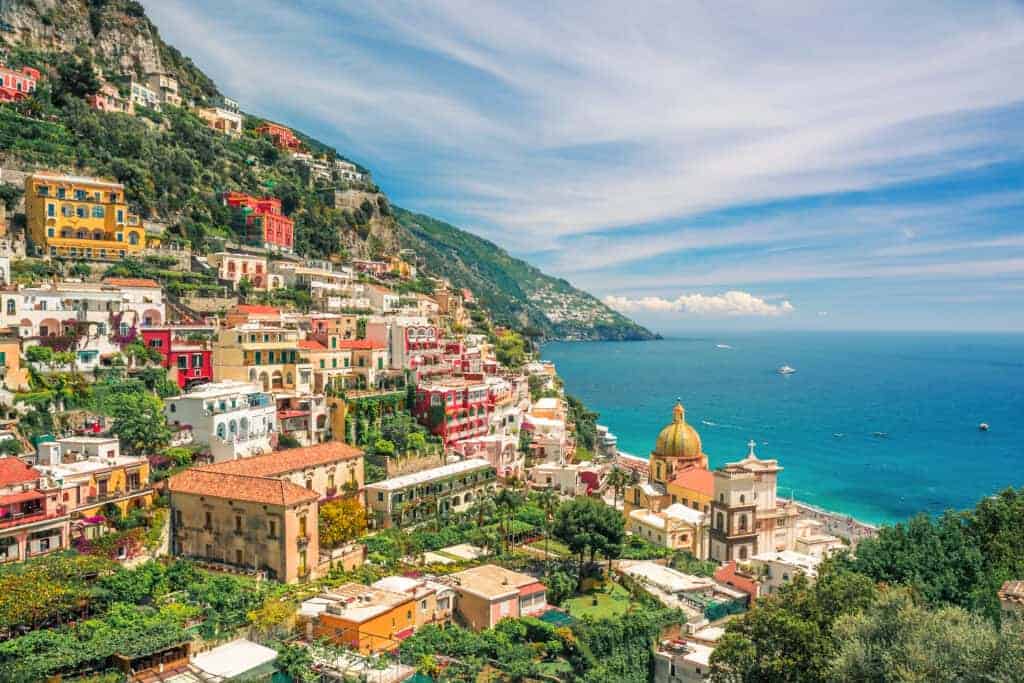
Positano and its dramatic hillside houses.
Positano is the Amalfi Coast’s most iconic town, and one of the most visually recognisable towns in Southern Italy. Known for its famous cascading pastel buildings, dramatic cliffside setting, and glamorous Mediterranean atmosphere that blends luxury travel with postcard-perfect scenery.
Well, what can I say…. arguably one of the most well-known towns in Campania and Italy, Positano is the jewel of the Amalfi Coast. It’s a village that charms visitors with its steep, narrow lanes lined with quaint boutiques and cozy cafes.
The unique architecture of its houses layered on the hillside, combined with the vibrant colours of the Mediterranean Sea, creates a mesmerizing vista you’ll see often in these beautiful towns along this stretch of coastline.
The village boasts a stunning pebble beach, with clear blue water, and a colourful cascade of pastel houses that make it a perfect place for photographers to capture breathtaking views. The small town’s warmth and hospitality, combined with its stunning vistas, make it a must-visit destination.
5. Ravello

Ravello sits high above the Amalfi Coast, offering a quieter and more romantic escape known for its breathtaking panoramic views, historic villas, and peaceful atmosphere far removed from the coastline crowds.
This peaceful, small village, renowned for its lovely gardens like Villa Rufolo and Villa Cimbrone, takes you away from the hustle and bustle of the other equally beautiful towns nearby and immerses you in its tranquil charm and cultural heritage.
Add it to your must-visit in Southern Italy list, you won’t be disappointed.
6. Amalfi
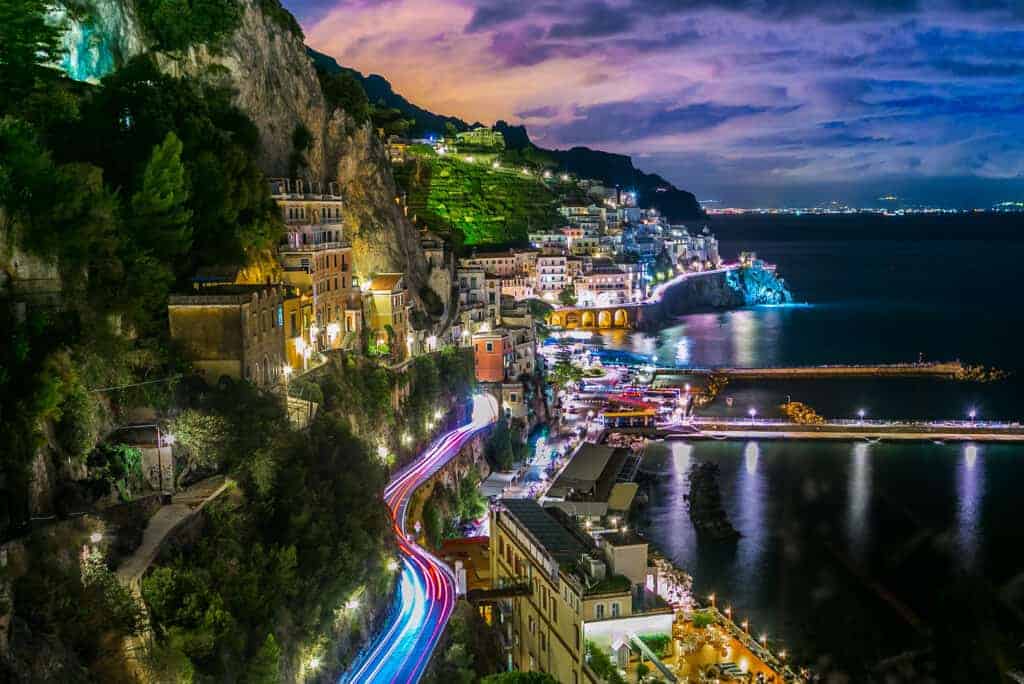
Amalfi is one of the Amalfi Coast’s most historic and iconic towns, where dramatic cliffside scenery meets centuries of maritime heritage, colourful architecture, and a lively coastal atmosphere that reflects the region’s rich cultural past.
In Amalfi, which gives the coast its name, you’ll find a picturesque maze of narrow laneways and the magnificent Amalfi Cathedral.
Roam through the bustling piazzas, or unwind by the gorgeous Mediterranean Sea taking in the delightful blend of cliff-hanging architecture and historical significance.
TIP! It can also be a great place to take an excursion by road or boat tour to/from Salerno or the other nearby small towns such as Positano, Vietri sul Mare and Praiano.
7. Furore

Furore, often referred to as ‘the town that doesn’t exist,’ is a hidden treasure. It’s home to the stunning Furore Fjord, a natural gorge, and houses painted in bright colours. Its secluded location and unique landscapes make it a special place to visit.
If you’re comparing Campania with other regions of Southern Italy, see my Southern Italy Travel Guide.
8. Capri

Capri is one of Southern Italy’s most glamorous and visually dramatic island destinations, famous for its rugged limestone cliffs, crystal-clear turquoise water, and elegant Mediterranean atmosphere that has attracted travellers and artists for generations.
The island combines luxury coastal scenery with historic charm, scenic walking trails, and iconic natural attractions such as the Blue Grotto, a small cave illuminated by an ethereal blue light and the Faraglioni rock formations.
Capri offers an unforgettable Mediterranean experience that shouldn’t be left off the itinerary.
9. Otranto

Otranto is in the Salento area of Puglia and is one of Italy’s eastern-most towns, combining historic charm, crystal-clear Adriatic water, and a relaxed seaside atmosphere centred around its impressive cathedral, historic castle, and lively waterfront promenade.
Otranto in Puglia is definitely worth checking out! From the inviting beaches to the fascinating Castello Aragonese that dates back to the 15th century, there is something for everyone here.
Stroll through the charming historic centre, filled with quaint shops and restaurants, or take a boat trip to one of the nearby islands for a day of adventure.
10. Peschici

Peschici is a charming whitewashed coastal village perched above the Adriatic Sea in Puglia, where narrow streets, sweeping sea views, and traditional fishing culture create one of the Gargano Peninsula’s most picturesque destinations.
Situated on a rocky promontory, it’s a popular destination for beachgoers and water sports enthusiasts. The town’s main beach, Marina di Peschici, has soft golden sand and offers various activities such as sailing, windsurfing, and kayaking.
As you explore the narrow streets of Peschici’s historic centre, you will come across charming houses adorned with colourful flowers and intricately designed balconies.
The town also features several noteworthy landmarks including the Church of Santa Maria di Loreto, which was built in the 11th century and showcases beautiful Byzantine frescoes.
11. Vieste

Vieste is the Gargano Peninsula’s most popular seaside town, famous for its dramatic limestone cliffs, historic old town, and long sandy beaches that make it one of northern Puglia’s most scenic coastal escapes.
Located on the tip of the Gargano Peninsula, Vieste is known for its clear waters and the iconic Pizzomunno rock formation.
12. Polignano a Mare
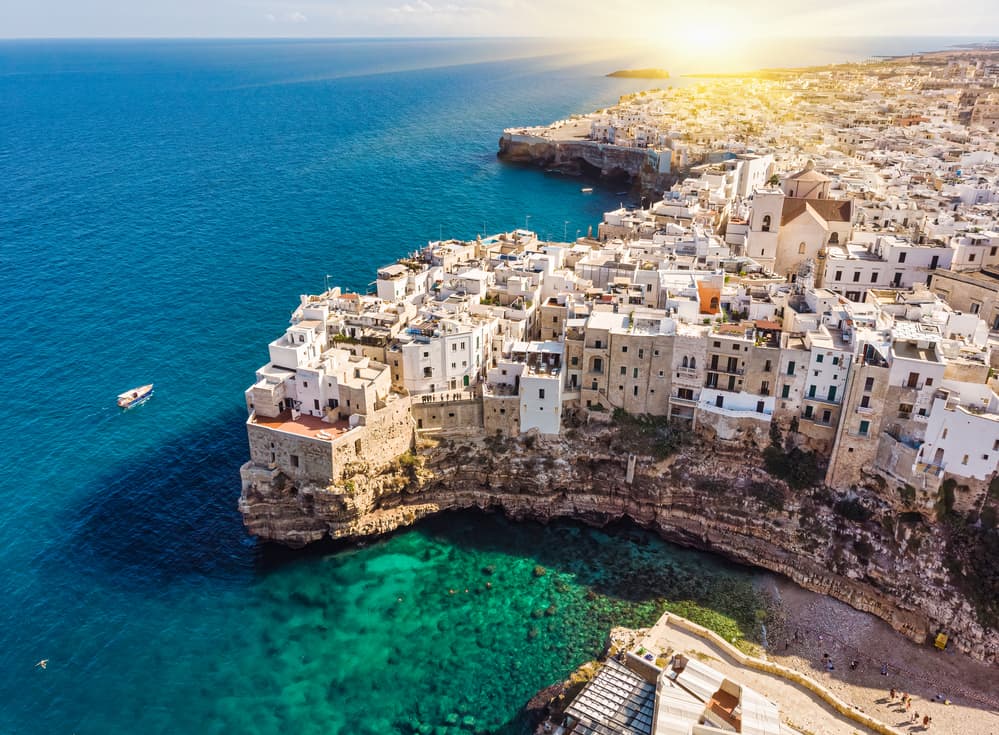
Polignano a Mare is one of Puglia’s most photogenic coastal towns, known for its dramatic cliff diving viewpoints, crystal-clear Adriatic water, and historic centre perched dramatically above the sea.
Polignano a Mare offers breathtaking cliff-side vistas and pebble beaches. It’s not just the stunning shoreline that entices visitors, but also the enchanting Old Town. With its charming narrow lanes and delectable gelato shops, it’s a true delight to explore.
It is one of the many lesser known, Southern Italy towns to visit, and should absolutely be on your Puglia itinerary.
13. Monopoli

Monopoli offers a more relaxed alternative to some of Puglia’s busier destinations, combining a charming old harbour, authentic local lifestyle, and a beautiful stretch of Adriatic coastline.
What makes Monopoli special is its off-the-beaten-path vibe. Unlike some of Italy’s more touristy spots, here you can experience the real laid back Southern Italian lifestyle.
Wander through the picturesque white-washed old town, where medieval walls and narrow streets tell stories of centuries past. And Don’t miss the impressive Charles V Castle, offering breathtaking views of the azure sea.
14. Alberobello

Alberobello in Puglia, is one of Italy’s most unusual towns, known worldwide for its fairytale-like trulli houses — whitewashed stone buildings topped with conical roofs that create one of Southern Italy’s most distinctive landscapes.
Walking through the streets of Alberobello feels like stepping back in time, with over 1,500 of these iconic houses still standing today. Originally built in the 16th century as temporary shelters for farm workers, they eventually evolved into permanent homes for families.
Today, many of these houses have been converted into shops, restaurants, and even hotels.
If you’re looking for a truly unique destination to add to that travel bucket list of yours, Alberobello and its trulli houses are definitely worth a visit.
15. Torre dell’Orso

Torre dell’Orso is known for one of Salento’s most beautiful beaches, where fine white sand and bright turquoise water are framed by striking limestone rock formations, creating one of Puglia’s most visually striking coastal landscapes.
Don’t miss the iconic ‘Two Sisters’ rocks, this beloved coastal retreat of local Italians, is an absolute beauty.
16. Punta Prosciutto

Punta Prosciutto is often considered one of Puglia’s most spectacular beaches, offering Caribbean-like white sand, shallow turquoise water, and wide open coastal scenery that feels remarkably untouched.
Located in the province of Lecce, in the Puglia region of southern Italy, it is also easily accessible from the nearby towns of Porto Cesareo and Torre Lapillo, making it a popular spot for day trips or longer vacations.
17. Torre Chianca Beach

Torre Chianca Beach, located in the Puglia Region, offers a quieter and more relaxed coastal experience near Lecce, with soft sandy shores, clear shallow water, and peaceful natural surroundings ideal for travellers seeking a less crowded Adriatic beach.
With its turquoise waters and stretch of golden sand, this stunning beach is perfect for a day of relaxation and swimming. Regularly visited in the Summer by locals and tourists alike, Torre Chianca beach is surrounded by lush Mediterranean vegetation.
You can take a stroll along the shore, soak up the sun, or indulge in a refreshing swim in the calm waters of the Adriatic Sea.
18. Porto Cesareo

Porto Cesareo is one of Salento’s best-known seaside destinations, combining a lively fishing harbour, clear Ionian water, and easy access to some of Puglia’s most beautiful beaches and protected marine areas.
Wander the narrow streets lined with traditional houses painted in vibrant colours, or visit the charming local churches and museums.
And of course, no visit to Porto Cesareo is complete without indulging in some of the mouthwatering local cuisine, offering some of the best seafood in the region.
19. Bari
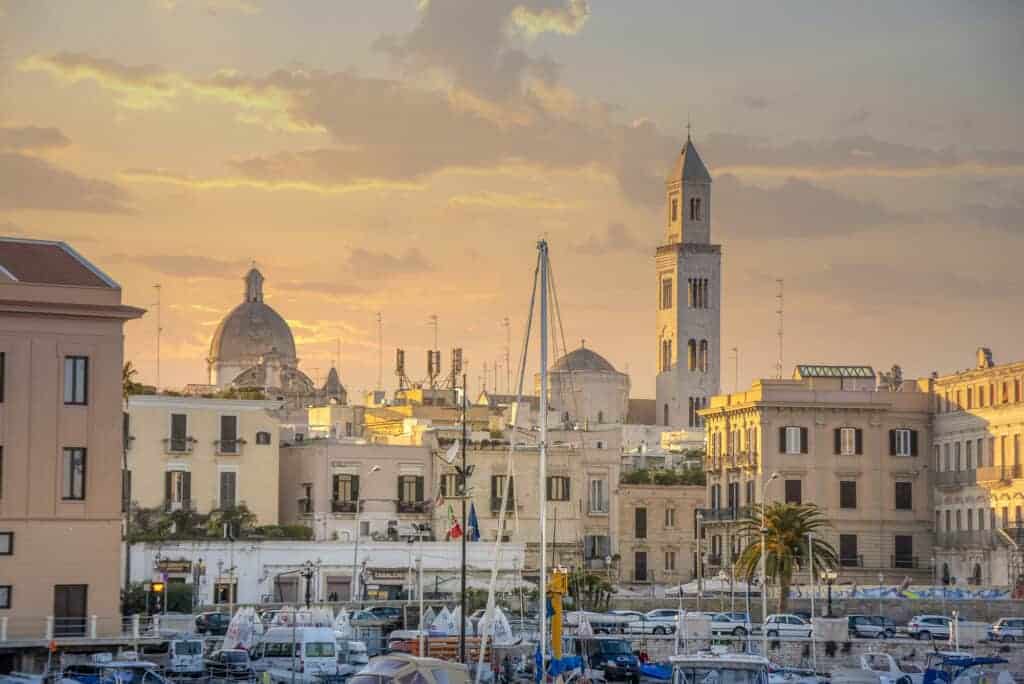
Bari is one of the largest cities in Puglia Italy. It blends historic charm with modern coastal city life, offering visitors a lively old town, authentic local food culture, and a strong sense of everyday Italian life.
The city’s charming old town, Bari Vecchia, is a labyrinth of narrow alleyways, where you can find beautiful churches, local shops, and restaurants.
Bari is also the main gateway to the region. Before you visit, read my guide on How to Get to Puglia.
20. Lecce

Facade of the Santa Croce Basilica in Lecce, Puglia
Often called the “Florence of the South,” Lecce is famous for its elaborate Baroque architecture, sun-bleached stone buildings, and relaxed southern Italian lifestyle centred around piazzas, cafés, and local traditions.
Nestled in the heart of the Southern Italian region of Puglia, Lecce is one of the most charming cities waiting to be discovered.
Its nickname, the “Florence of the South” is well deserved, as it boasts an abundance of ornate Baroque architecture, stunning churches, and palaces in and around the Central Piazza del Duomo.
For a broader overview of the region’s towns, coastline and attractions, see my Puglia Travel Guide.
21. Matera

Matera is unlike anywhere else in Italy, its located in the lesser known Basilicata region of Italy and is famous for its ancient cave dwellings, called “Sassi”.
These cave houses, carved into limestone cliffs and its extraordinary atmosphere shaped by thousands of years of human history. Walking through Matera feels like stepping into a living archaeological landscape.
Matera is also one of the highlights featured in my Southern Italy Itinerary and Hidden Gems in Southern Italy guide.
The Sassi of Matera are recognized as a UNESCO World Heritage site due to their historical and cultural significance. The city’s history can be traced back over 9,000 years, making it one of the oldest continuously inhabited settlements in the world.
Visitors to Matera can explore the winding streets of the Sassi, marvel at the rock-cut churches and dwellings, and breathe in the city’s rich cultural heritage. So far as small cities in Basilicata Italy goes, Matera is without doubt the most famous.
22. Reggio Calabria

Now we are really getting down to the bottom of Italy’s boot, right on the toe of the Italian Peninsula.
Reggio Calabria is one of the main cities in Calabria Italy. It combines Mediterranean seaside charm with fascinating archaeological treasures, including the famous Riace Bronzes, and offers spectacular views across the Strait of Messina toward Sicily.
Reggio Calabria is also known for its magnificent waterfront promenade. The city offers a unique blend of history, culture, and gastronomy that is as good as anywhere in Italy.
Directly opposite Sicily and separated by the Messina Straits, Reggio Calabria has a rich heritage that dates back to ancient times.
Reggio Calabria was founded by Greek colonists around 720 BC, making it one of the oldest cities in Italy. The city’s strategic location on the Strait of Messina made it an important trade hub throughout its history, and it has been influenced by various cultures, including Greek, Roman, Byzantine, Norman, Spanish and French.
23. Tropea

Tropea beach with the Historic church of Santa Maria della Isola
Tropea, is one of the most spectacular coastal towns in Southern Italy, perched dramatically above its beaches, with a clear turquoise sea below. It is the Jewel of Calabria’s famous Coast of the Gods. (‘La Costa Degli Dei’ in Italian).
Having lived in Tropea for many years, I’ve had the opportunity to explore the town and surrounding coastline extensively, and it remains one of my favourite places in Calabria, if not the whole of Italy.
If you’re planning a visit, you can explore the town’s highlights in my guide to Things to Do in Tropea, and discover the most beautiful swimming spots in Best Beaches in Tropea.
From the cliffs of Tropea, overlooking the Tyrrhenian Sea, you’ll find the stunning ‘Santa Maria della Isola’ of Tropea. This exquisite 9th-century church is one of the most recognizable landmarks in all of Calabria.
In recognition of its uniqueness, In 2021, Tropea was voted as the #1 ‘Borgho dei Borghi’ in all of Italy. Take a stroll along the narrow lanes of the ‘Centro Storico’ (historic centre) and you’ll feel the history around you.
When you visit this stunning Medieval cliff-top town, you will see why it is becoming one of the most visited towns in Italy, both by foreigners and Italians alike.
Tropea is also a perfect base for exploring nearby destinations such as Scilla, Pizzo, and the beaches of Capo Vaticano along Calabria’s Tyrrhenian coast.
If you’re planning several days in the area, don’t miss my Calabria Travel Guide. and detailed guide to the Best Beaches in Tropea.
A Bonus for visitors to Tropea: From the Port of Tropea you can take a day trip by boat, to the magnificent Aeolian Islands. (actually part of Sicily). I have done this trip many times over the years, both for day trips and extended stays on the Islands themselves. I will be covering them in a separate Guide soon, so stay tuned for that.
24. Scilla
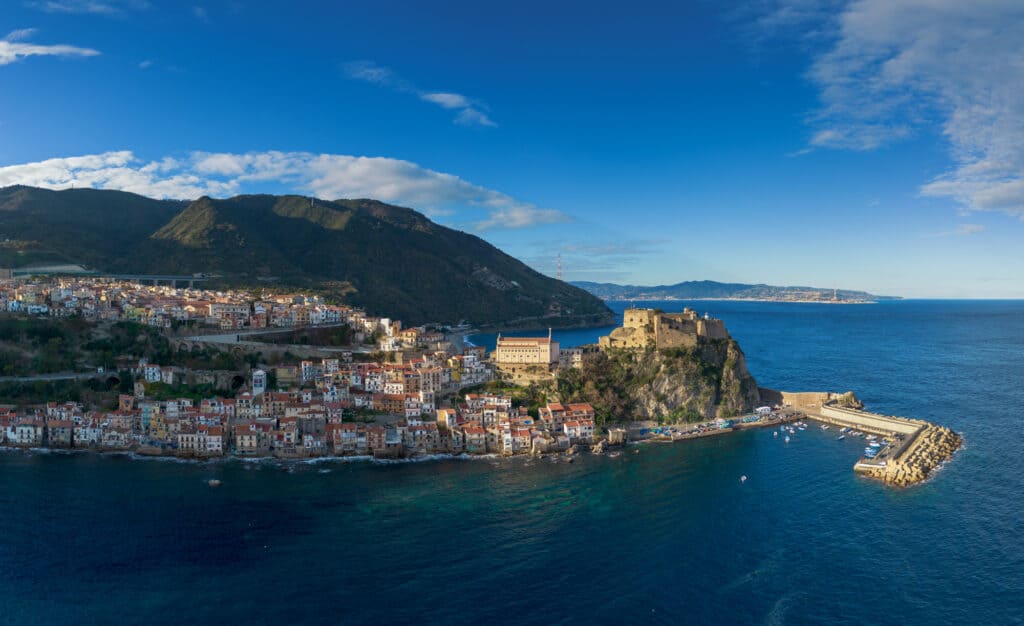
Scilla in Calabria, is a charming fishing village known for its colourful seafront houses, crystal-clear water, and traditional maritime culture that feels untouched compared to many better-known coastal destinations.
It is one of the lesser known coastal towns in Southern Italy, which is what makes it even more special.
It has a charming beach and intriguing mythical history. The sparkling clear blue sea and the imposing Ruffo Castle add to the allure of the town.
Scilla is also one of the destinations featured in my Calabria Travel Guide and remains one of my favourite Hidden Gems in Southern Italy.
25. Capo Vaticano

Capo Vaticano is one of Calabria’s most spectacular coastal areas, known for its dramatic cliffs, hidden coves, and some of the clearest turquoise water in Southern Italy.
This beautiful coastal stretch boasts white sand beaches that are perfect for swimming and snorkelling, or just lazing about on the beach. It is only a 20-minute drive from Tropea and well worth a visit.
Most visitors combine Capo Vaticano with nearby Tropea and the famous Coast of the Gods.
TIP: The stunning views from the lighthouse are not to be missed!
26. Le Castella

Punta delle Castella , better known as Le Castella is an Italian coastal village in The Province of Crotone , in Calabria. It is located on the Ionian coast of Calabria , at the eastern end of the Gulf of Squillace, 20 km from Crotone and 40 km from Catanzaro (the Capital City of Calabria)
We decided to include it in our Calabria Road trip in 2024 and we were not dissapointed. There is not a lot to do in the town itself, but you can have lunch, a cafe stop or an evening aperitivo, (which we did) and watch the sun set over the historic Arogenese Castle.
Capo Rizzuto itself is one of Calabria’s most underrated coastal areas, known for its protected marine reserve, long stretches of sandy shoreline, and a slower, more authentic seaside atmosphere that feels far removed from Italy’s busier resort destinations.
For a detailed itinerary, including this top spot, check out our 4-day Calabria road trip.
27. Stilo

Stilo is a small historic hill town that offers one of Calabria’s most unique cultural experiences, best known for the remarkable Byzantine-style Cattolica church and its peaceful mountain setting overlooking the Ionian coastline.
The town is also home to the Norman Castle of Stilo, which dates back to the 11th century and was once an important stronghold in the area. In addition to its historical significance, Stilo is an ideal destination for travellers looking to explore the great outdoors.
Whether you’re a history buff or simply looking for a relaxing vacation spot with beautiful beaches, Capo Rizzuto Island is a great find. Take a swim at Le Castella beach, explore the impressive Aragonese Castle, or indulge in some of the region’s delicious cuisine.
With a warm and welcoming atmosphere, this part of Calabria is becoming a popular vacation spot in for both Italians and overseas visitors.
If Calabria appeals to you, see my complete Calabria Travel Guide and suggested Calabria Road Trip itinerary.
28. Palermo
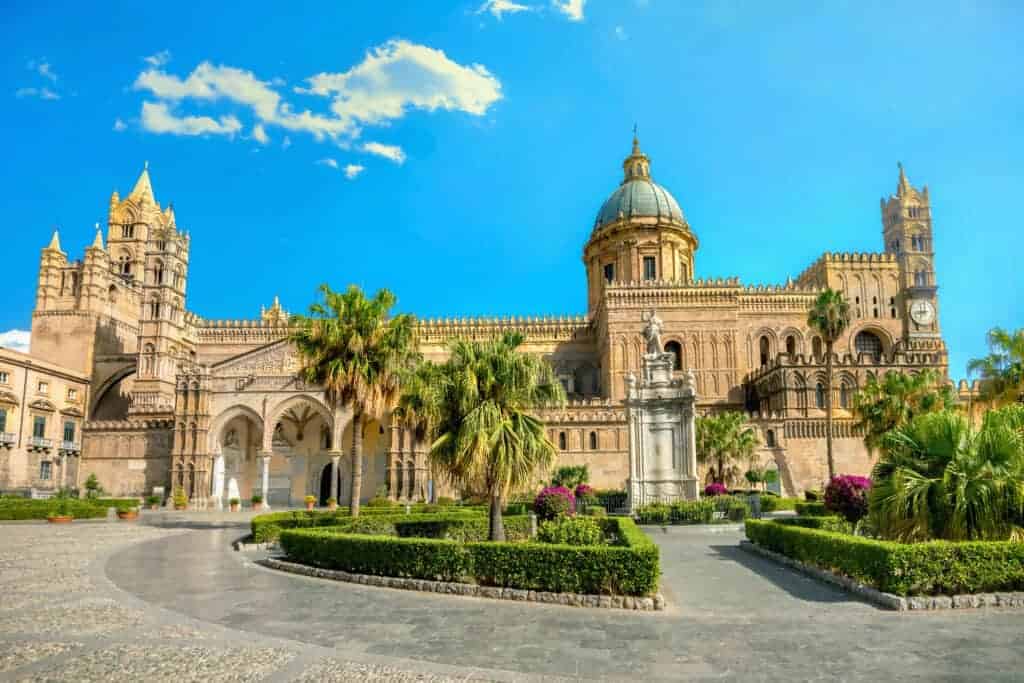
Palermo Cathedral (Duomo di Palermo).
Palermo is Sicily’s cultural melting pot, where Arab, Norman, and Italian influences blend into a city defined by historic architecture, chaotic street markets, and one of the most celebrated food scenes in Southern Italy.
The capital and largest of the cities in Sicily Italy, Palermo is one of Sicily’s quintessential cities, embodying the true essence of Southern Italy’s metropolis.
The city’s incredibly long history is reflected in its stunning Baroque churches and Arab-Norman architecture, which create a unique atmosphere that you won’t find anywhere else.

In Palermo, you can explore bustling markets, experience the grandeur of the opera house, and marvel at the captivating Monreale Cathedral.
This magnificent city is a must-visit destination for anyone seeking adventure, culture, and beauty.
29. Syracuse
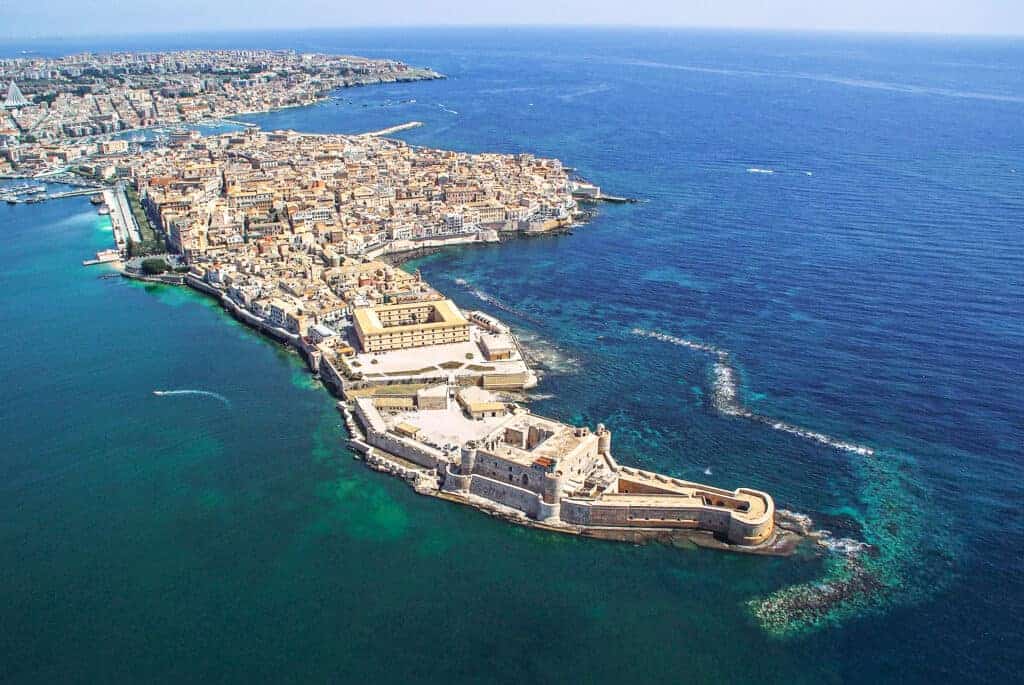
Syracuse, or Siracusa in Italian, is one of the most significant historic towns in Southern Italy. It is one of Sicily’s most historically layered cities, where ancient Greek ruins, Baroque architecture, and coastal Mediterranean beauty combine to create one of the island’s most culturally rich destinations.
The island district of Ortigia forms its atmospheric historic heart, filled with narrow streets, seafront views, and centuries of history.
Founded by the Greeks in 734 BC, ( 2,758 years ago! ), Syracuse has been home to several different cultures and civilizations over the centuries, including the Roman Empire, the Byzantines, and the Arabs.
But Syracuse isn’t just a place for history buffs – the city also boasts a lively food scene, some great beaches nearby, facing the Ionian Sea, and plenty of opportunities for outdoor adventure. It’s another fascinating Sicilian gem to be added to your list.
30. Catania
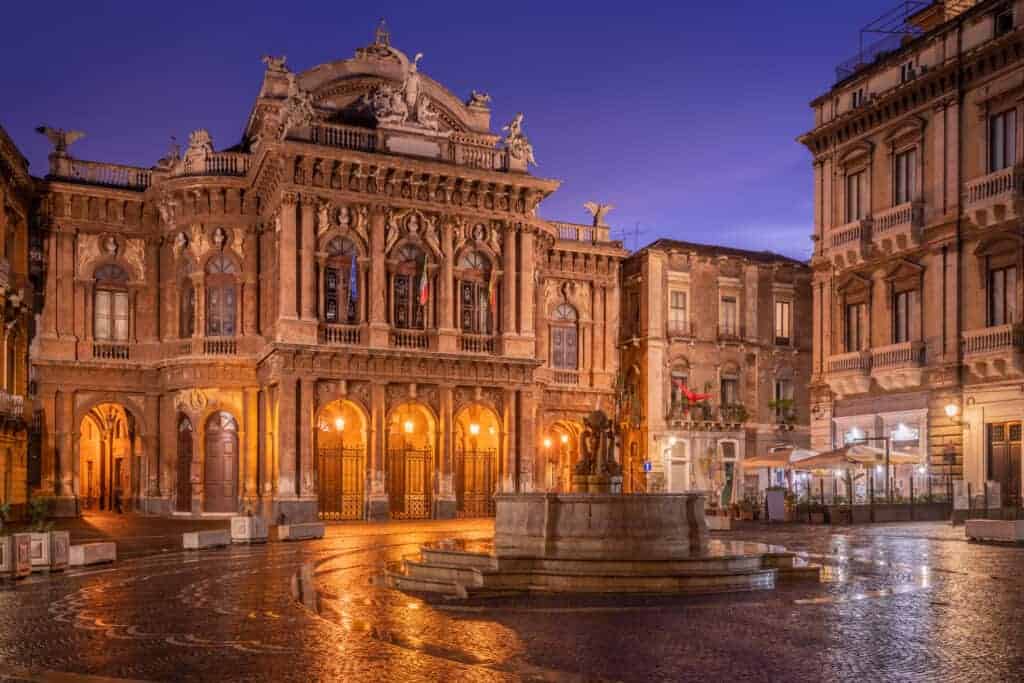
Catania is one of Sicily’s most energetic and visually striking cities, where Baroque architecture built from volcanic lava stone sits beneath the dramatic presence of Mount Etna, creating a vibrant destination shaped by history, culture, and powerful natural landscapes.
Located on the eastern coast of Sicily and also on the Ionian Sea, Catania offers a unique mix of ancient history and modern city living.
The city boasts breathtaking architecture, such as the Baroque-style Cathedral of Saint Agatha, and the Ursino Castle. You can indulge in the local cuisine at the bustling fish market, or explore the food stalls of the Piazza del Duomo.
The night scene is also vibrant, with plenty of bars and clubs to dance the night away. For adrenaline seekers, Mount Etna, Europe’s tallest active volcano, is just a short drive away.
31. Taormina

Taormina is one of Sicily’s most picturesque destinations, known for its dramatic hilltop setting overlooking Mount Etna and the Ionian coastline. It combines elegant historic streets with spectacular views that have attracted travellers for centuries.
Since the US drama series ‘WHITE LOTUS’, which was filmed here and in Cefalu, and aired around the world, it has put Sicily on the itinerary of many travellers.
Having said that, Taormina is still an enchanting destination in Sicily that offers breathtaking views of the active volcano of Mount Etna. The town’s ancient Greek theatre is a must-visit for tourists who want to immerse themselves in history.
The charming alleyways and streets of Taormina are perfect for exploring, and visitors can enjoy the local food and culture at one of the many restaurants and cafes. For those who love the sun, sand, and swimming, the beautiful Isola Bella Beach is an ideal place to relax and soak up the sun.
Taormina is definitely one of the most beautiful towns to visit in Southern Italy.
32. Cefalu

Cefalù is one of Sicily’s most charming coastal towns, where golden beaches meet a historic old town dominated by a magnificent Norman cathedral and a dramatic mountain backdrop that creates one of the island’s most photogenic settings.
Cefalu has also gained popularity among fans of the “WHITE LOTUS” series, as some scenes were filmed around the town and on the beach. Remember the opening scene, as the girl goes for a swim? For anyone who has watched the ‘White Lotus Sicily’ series, they will know what I mean.
Whether you’re interested in exploring the ancient ruins of the Temple of Diana or simply soaking up the sun on one of the many beaches, Cefalu is a delightful destination.
33. Castelmezzano

Castelmezzano is one of the most dramatic towns in southern Italy, perched high among the jagged peaks of the Dolomiti Lucane in Basilicata. Its tightly clustered stone houses seem to grow directly out of the rock, creating a spectacular and unforgettable setting.
The town is best known for its breathtaking scenery and outdoor experiences, including the famous “Flight of the Angel” zip line between mountain villages. Despite its adventurous appeal, Castelmezzano also offers quiet charm, narrow lanes, and panoramic views that make it a truly unique destination.
34. Ostuni

Ostuni is one of the most beautiful and distinctive towns in southern Italy, often referred to as the “White City” for its dazzling whitewashed buildings. Set on a hill overlooking the Adriatic Sea, it offers a maze of narrow streets, stairways, and bright facades that reflect the sunlight.
The historic centre is full of charm, with lively piazzas, artisan shops, and the impressive Ostuni Cathedral at its heart. Its combination of coastal proximity, striking architecture, and vibrant atmosphere makes it one of the most popular destinations in Puglia.
35. Locorotondo

Locorotondo is widely considered one of the prettiest towns in southern Italy, known for its perfectly maintained white houses and flower-filled balconies. Its circular layout and peaceful atmosphere create a picture-perfect setting that feels both elegant and authentic.
Located in the Itria Valley in Puglia, it is surrounded by countryside dotted with trulli and vineyards. Strolling through its quiet streets reveals charming details at every turn, making Locorotondo a delightful stop for those seeking a more relaxed and scenic experience.
36. Maratea
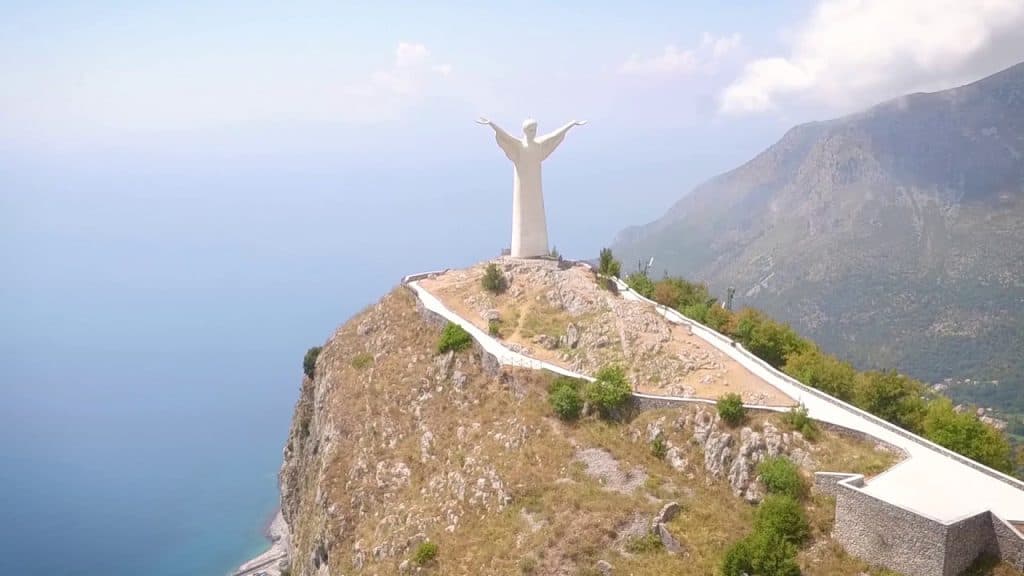
Maratea is a hidden gem on the Tyrrhenian coast of Basilicata, known for its stunning combination of mountains and sea. With over 20 kilometres of coastline, it offers some of the most beautiful beaches and dramatic cliffside views in southern Italy.
Above the town stands the iconic statue of Christ the Redeemer, which overlooks the coastline and provides spectacular panoramic views. Maratea’s mix of natural beauty, historic charm, and laid-back atmosphere makes it a unique and less crowded alternative to more famous coastal destinations.
37. Castellabate

Castellabate is a charming hilltop town in southern Italy, located in the Cilento region of Campania and overlooking the Tyrrhenian Sea. Its historic centre is filled with narrow streets, stone buildings, and scenic viewpoints that offer sweeping coastal views.
Below the old town lies Santa Maria di Castellabate, a relaxed seaside area with sandy beaches and a welcoming atmosphere. As part of a UNESCO-listed national park, Castellabate combines natural beauty with authentic southern Italian character, making it an ideal destination away from the crowds.
Getting Around Southern Italy
While some larger cities are connected by train, in my experience, many of Southern Italy’s smaller towns and coastal areas are best explored by car.
If you plan to visit multiple regions or more remote destinations, having your own vehicle gives you far more flexibility.
For a more detailed breakdown of transport, driving and itinerary planning, see my complete Southern Italy travel guide.
Best Southern Italy Cities & Towns by Travel Style
If you’re trying to decide where to go in Southern Italy, each destination offers a very different experience. Here’s a quick overview to help you match your travel style with the right place:
• For vibrant culture and history: Naples, Palermo, Matera
• For iconic coastal scenery: Positano, Taormina, Tropea & Coast of the Gods
• For food-focused travel: Naples, Bari, Lecce
• For romantic and scenic escapes: Ravello, Sorrento, Scilla
• For quieter, authentic local feel: Maratea, Pizzo, Locorotondo & Hidden Gems
• For unique historic towns: Matera, Alberobello, Lecce
Continue Planning Your Southern Italy Trip….
- Southern Italy Travel Guide
- Southern Italy Itinerary
- Hidden Gems in Southern Italy
- Calabria Travel Guide
- Campania Travel Guide
- Puglia Travel Guide
- Things to See & Do in Tropea
- Best Beaches in & near Tropea
Frequently Asked Questions:
1. Which is the most beautiful city in Southern Italy?
That depends on your travel style, but some of the most beautiful and fascinating cities in Southern Italy include Palermo, Naples, Matera and Bari.
Each offers a completely different experience, from historic streets and coastal views to incredible food culture.
2. What are the best beach towns in Southern Italy?
Some of the best beach towns in Southern Italy include Tropea, Polignano a Mare, Scilla and Cefalù.
These destinations combine beautiful beaches with historic centres, local restaurants and relaxed southern Italian atmosphere.
3. Which Southern Italy cities are least touristy?
Regions like Calabria and Basilicata are home to many quieter and lesser-visited towns. Places such as Pizzo, Sciacca and Maratea still feel authentic and relatively undiscovered.
4. How many days do you need in Southern Italy?
Ideally, I would allow at least 2–3 weeks to properly experience Southern Italy. If you have less time, say 1-2 weeks it is better to focus on one or two regions rather than trying to see everything too quickly.
5. What is the best base for exploring Southern Italy?
Good bases depend on the type of trip you want. I found Naples ideal for exploring Campania, while Palermo and Bari are excellent starting points for Sicily and Puglia. For Calabria, my home region, Tropea is a perfect base.
6. Is it worth visiting Southern Italy?
Definitely an overwhelming YES! Italians are warm and friendly people in general, whether from Northern Italy or the South, but in the South, they are notably more outgoing and welcoming towards tourists.
7. What food is the Southern part of Italy known for?
One thing immediately comes to mind: the famous Mediterranean diet. This diet boasts healthy and delicious ingredients like fresh, seasonal fruit and plenty of seafood.
The southern region is home to a huge selection of seafood dishes, including spaghetti alle vongole (spaghetti with clams) and pesce spada alla siciliana (Sicilian-style swordfish).
And let’s not forget about pizza! Proudly invented in Napoli! With all these delectable options, Southern Italian cuisine is celebrated all over the world.
8. Is it worth going to Sicily?
Most definitely! Sicily offers a unique blend of cultural experiences that you won’t find anywhere else in Italy, from exploring the ancient Greek temples in Agrigento to wandering through the winding streets of Palermo’s historic centre.
And don’t forget about the food! Sicilian cuisine is a delicious fusion of Italian, middle eastern and Mediterranean flavours.
If you want help turning these places into a realistic journey, start with my Southern Italy itinerary & planning guide, where I break down routes, travel times, and pacing.
This post is the first of many more helpful posts to come, on your discovery of Southern Italy by Herb Nagel. For an overall view of all the regions see the Southern Italy map above.


