

Tropea Italy Travel Guide: Everything You Need to Know Before You Visit

INTRO:
Tropea is one of those places that makes an immediate impression.
Perched high above the Tyrrhenian Sea on Calabria’s western coast, its historic centre seems to rise almost directly from the cliffs. Below are sandy beaches and clear blue water, while the Sanctuary of Santa Maria dell’Isola stands on its rocky promontory beneath the town.
It is the classic view of Tropea — and one of the most recognisable images of Calabria.
But Tropea is much more than a beautiful viewpoint.
Spend a little time here and you discover a compact historic centre of narrow streets, old palazzi, churches and little piazzas.
Stairways descend from the town towards the beaches below. In the evening, the streets fill with people taking their passeggiata, eating outdoors or gathering at the viewpoints as the sun disappears over the Tyrrhenian Sea.
And beyond Tropea itself is the Costa degli Dei — the Coast of the Gods — one of the most beautiful stretches of coastline in Calabria.
Having spent years exploring Calabria and this part of southern Italy, I think Tropea works particularly well because you don’t have to choose between a historic town and a beach destination.
You get both.
It is also compact enough to explore on foot, has its own railway station and makes an excellent base for discovering places such as Capo Vaticano, Parghelia and Pizzo.
Tropea is one of Calabria’s most spectacular coastal towns and, in my opinion, one of the highlights of the region. If you’re planning to explore further, don’t miss my Calabria Travel Guide, where I cover the best places to visit, road trips, beaches and practical travel advice.
This Tropea Italy travel guide is designed to help you understand the destination and plan your trip: when to visit, how long to stay, where to base yourself, whether you need a car, what Tropea is really like and how to make the most of your time here.
If you’re wondering what to prioritise during your visit, start with my guide to the best things to do in Tropea, where I cover the town’s main attractions, viewpoints, beaches and experiences.
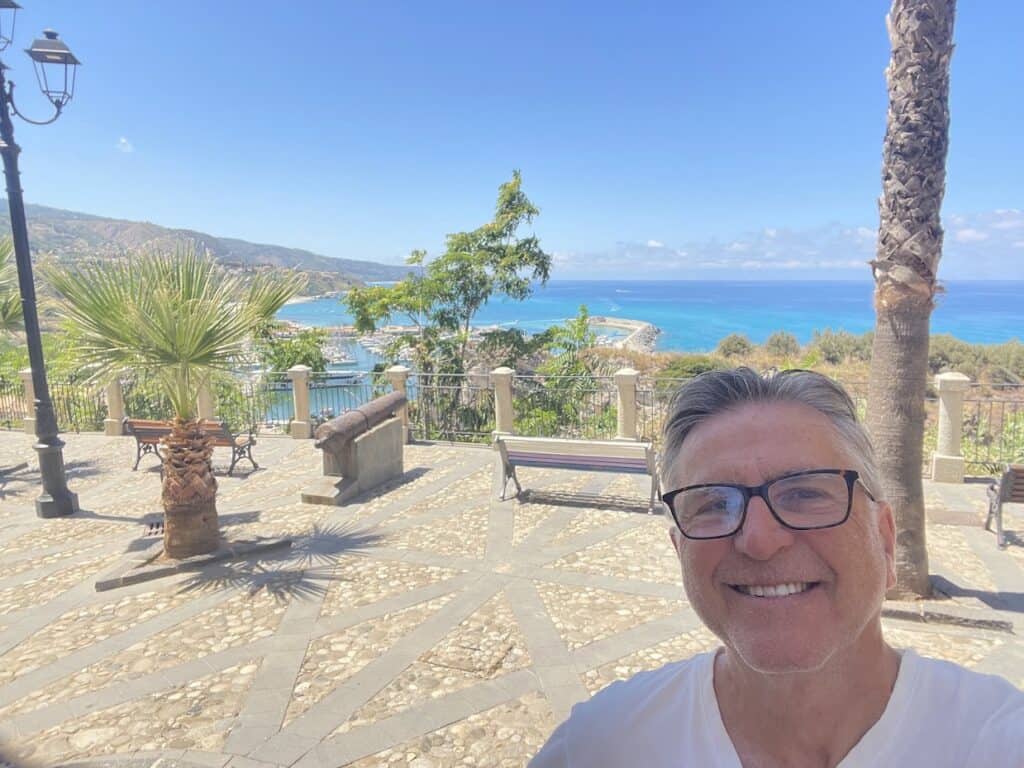
I have made Tropea my home for the last nine years after first discovering this jewel in 2006. Walking its streets, sampling nearly every restaurant and café, and photographing the town extensively in every season, has given me an intimate, on-the-ground understanding of Tropea’s rhythms, flavors, and best-kept secrets.
Beyond the town itself, I know the nearby villages and beaches well — I’ve sailed the Coast of the Gods and mapped out the hidden coves and quiet stretches of sand only locals visit. Use this guide as your one-stop resource for exploring Tropea, Calabria, and the wider charms of southern Italy.
Where Is Tropea?
Tropea is on the western coast of Calabria in southern Italy, overlooking the Tyrrhenian Sea.
It belongs to the province of Vibo Valentia and sits close to the centre of the coastline known as the Costa degli Dei, or Coast of the Gods.
The historic centre occupies a cliff roughly 60 metres above the sea, while the lower part of Tropea extends towards the marina and beaches. That unusual geography explains much of the town’s character: you can be wandering through historic streets one moment and looking almost vertically down towards the sea the next.
On clear days, views stretch far across the Tyrrhenian Sea, and the volcanic silhouette of Stromboli can sometimes be visible on the horizon.
Tropea’s position also makes it useful as a base. Capo Vaticano lies to the south, while Parghelia, Zambrone and Pizzo can all be incorporated into a longer stay along the coast.
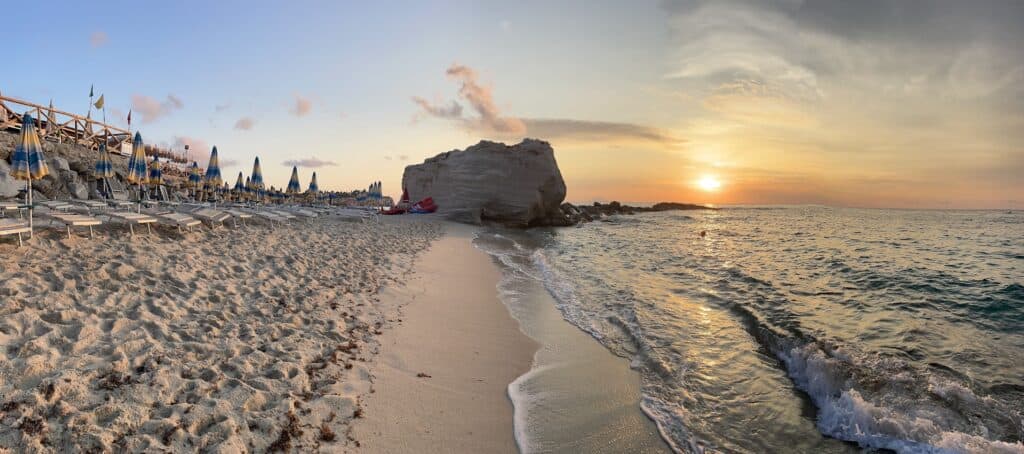
What Is Tropea Really Like?
This is something I think conventional travel guides often fail to explain.
Tropea is small.
If you arrive expecting a destination packed with major monuments requiring four days of sightseeing, you may be surprised by how quickly you can walk around the historic centre.
But that misses the point of staying here.
Tropea works because several different experiences are concentrated into a relatively small area.
You can explore the historic centre in the morning, walk down to the beach, return for a late lunch, rest during the hottest part of the afternoon and then head back into town for sunset and dinner.
You don’t need a car to do any of that.
The atmosphere also changes enormously through the day.
Early morning can be relatively peaceful. By late morning and afternoon, beaches and streets become busier. In summer, evenings bring another transformation as restaurants fill and people wander through the old town.
Tropea is therefore better experienced slowly than approached as a list of attractions.
When you first arrive in Tropea you’re greeted by a cliff-top town where historic buildings tumble toward a turquoise sea. The scent of the sea mixes with the aromas coming from the trattoria’s and Cafes, scooters thread through narrow lanes, and the view of the Sanctuary of Santa Maria dell’Isola anchors the town like a postcard come to life.
Small shops open their shutters, fishermen mend nets down at the Harbour, and the piazzas feel compact and intimate — everything here happens within a handful of steps, which is why first impressions are so visual and immediate.
Early mornings in Tropea are quiet and luminous. Cafés serve espressos while fishermen bring in the day’s catch; light spills across the rocks and the air is cool enough to walk without the afternoon heat. By evening the town becomes a softer, warmer version of itself: Piazza’s fill with chatter. Morning feels like discovery; evening feels like celebration.
What surprised me when I first spent time here was how lived-in Tropea is behind its perfect views. Beyond the tourist shots there are laundry lines, small family-run shops, and ordinary rhythms — kids playing in courtyards, elders chatting on bench corners — that give the place real texture. The town’s charm comes from that mix of everyday life and spectacular scenery, not just its picture-perfect moments.
The atmosphere shifts with the summer months. In June you get long, golden days and a relaxed energy: locals and early visitors coexist peacefully. However, August brings a lively bustle — crowded beaches, later nights, and a festival pulse that can feel joyful and intense at the same time.
September softens again: the sea is still warm, crowds thin, and the town returns to a calmer, more local pace that many find ideal. As for photos versus reality, the images you see online are honest — Tropea is undeniably beautiful — but the real enjoyment is in the small details and daily life that cameras don’t always capture: a tucked-away café, or the way the light hits the cliffs at dawn.
Is Tropea Worth Visiting?
For most travellers visiting Calabria, yes.
But I think the more useful question is who is Tropea right for?
Tropea is particularly appealing if you enjoy combining a beach holiday with an atmospheric town.
It works well for travellers who like exploring independently, walking to restaurants in the evening, spending part of the day swimming and using one attractive base rather than changing hotels every night.
It is also a good option for travellers who want to experience coastal Calabria without necessarily renting a car.
On the other hand, Tropea probably isn’t somewhere I would recommend primarily for museums, major archaeological sites or a long list of conventional attractions.
Its appeal comes from the combination of town + sea + food + atmosphere + surrounding coastline.
There is another qualification.
Tropea is no longer an undiscovered Italian beach town.
Its popularity has grown considerably, and during July and particularly August it can become extremely busy.
That doesn’t make Tropea less beautiful. But it does mean that when you visit has a major influence on the experience.
What Is Tropea Famous For?
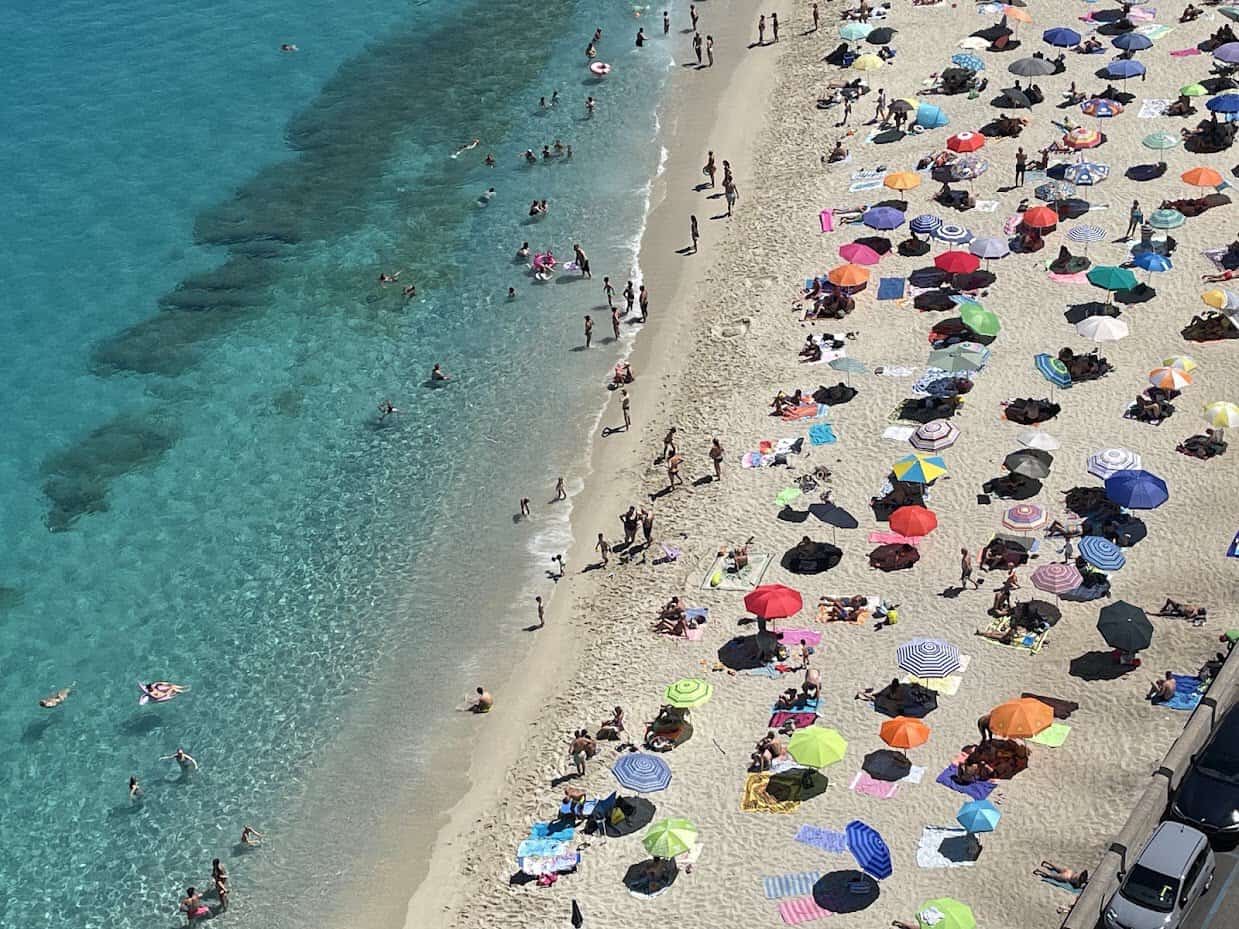
Tropea is best known internationally for its spectacular clifftop setting, beaches and the Cipolla Rossa di Tropea Calabria IGP, the sweet red onion associated with this part of Calabria.
Its defining landmark is the Sanctuary of Santa Maria dell’Isola, which stands on a rocky promontory immediately below the old town.
The town itself rises approximately 60 metres above the sea, producing the dramatic relationship between architecture, cliffs and beaches that you see in photographs.
Tropea’s historic centre is also worth exploring in its own right, with old palazzi, churches, narrow streets and viewpoints opening towards the Tyrrhenian Sea.
But I would avoid thinking of Tropea as a collection of famous sights.
Its setting is the attraction.
Things to See and Do in Tropea
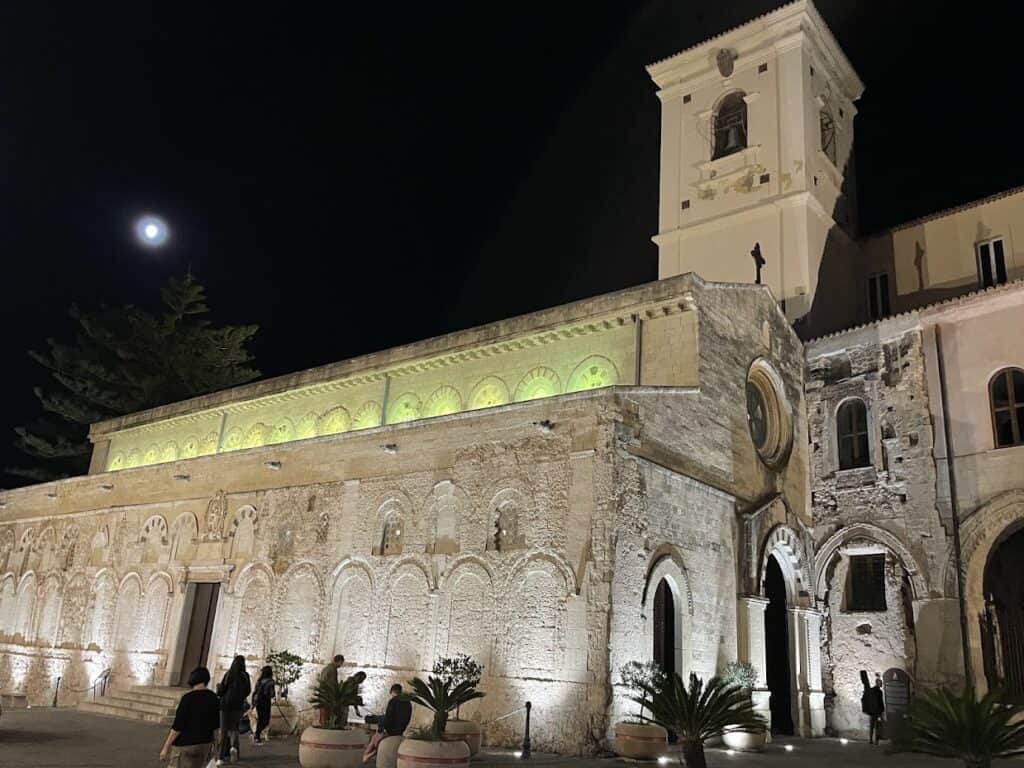
There are several places that almost every first-time visitor will want to see.
The Santuario di Santa Maria dell’Isola is the obvious landmark. The sanctuary occupies what was once an island-like rocky outcrop and is reached by climbing a staircase from below.
Tropea’s historic centre deserves time simply for wandering. Look beyond the busiest streets and explore the smaller lanes, old buildings, churches and openings along the cliff edge.
The Cathedral of Maria Santissima di Romania, whose origins date to the Norman period, adds another layer to the history of the town.
And then there are Tropea’s belvedere viewpoints, where streets suddenly open towards the sea.
But one of my favourite things about Tropea is that you don’t have to spend the day moving between attractions.
Walk.
Stop for coffee.
Explore a side street.
Go down to the beach.
Come back into town before sunset.
The destination makes much more sense when you allow time for that.
→ Read my complete guide to What to See and Do in Tropea for the individual sights, viewpoints and suggested walking route.
Herb’s Tip:
If I were showing a friend Tropea for the first time, this is how I would spend the first two hours...… I’d start with a slow stroll down Corso Vittorio Emanuele II, soaking up the shops, cafés, and Calabrian street food, then stop for a cappuccino in Piazza Vittorio Veneto.
We’d continue to the corso’s end at Affaccio del Corso, to reveal the Sanctuary of Santa Maria dell’Isola and the turquoise sea, then slip through a narrow alley to Piazza Canone for sweeping views of Tropea’s beaches and the Aeolian Islands on a clear day.
Descend the stairs to sea level for a close-up of the sanctuary, then walk the Lungomare past Linguata, Mare Grande and Spiaggia degli Dei toward the port, pausing to swim at the free beaches of Mare Piccolo and Spiaggia della Rotonda.
At the marina we’d watch fishermen mend nets and sell fresh catch, then climb the steep stairs back to the centro storico and finish at the Cathedral of Maria Santissima di Romania — a compact introduction to Tropea’s highlights.
Beaches in Tropea
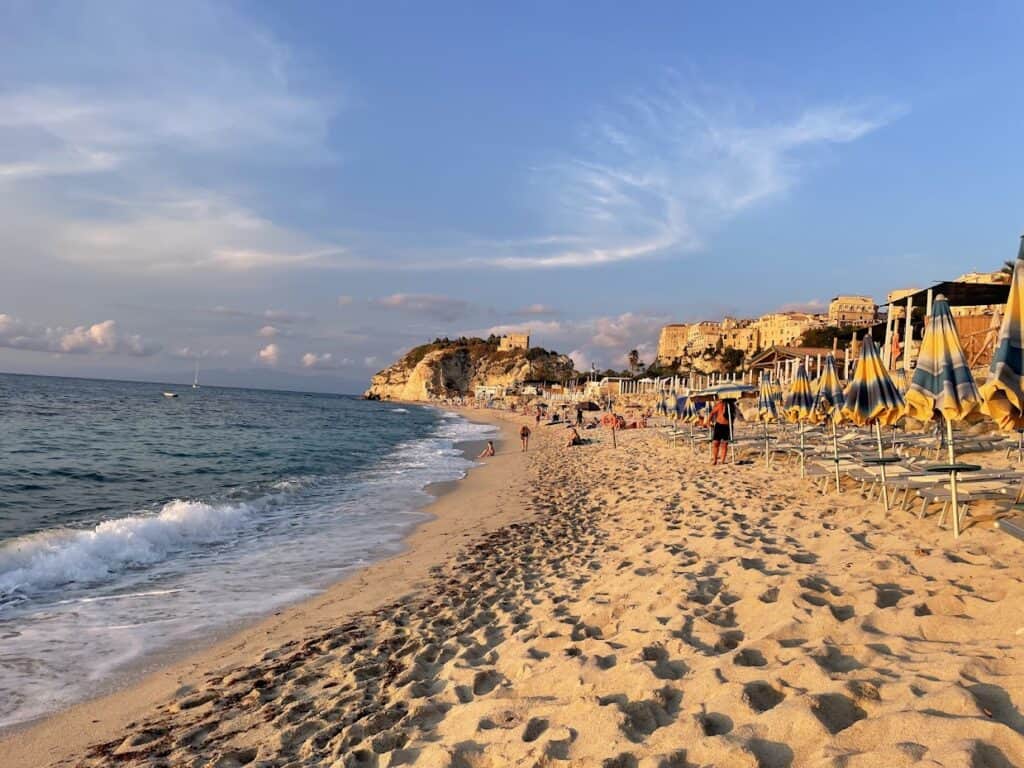
One of Tropea’s greatest advantages is that you don’t have to leave town to find beautiful beaches.
Several stretches of beach lie directly beneath and around the historic centre and Santa Maria dell’Isola.
You’ll find both free beach areas and organised lidos, while the wider Costa degli Dei offers many more beaches around Parghelia, Riaci, Santa Domenica and Capo Vaticano.
Tropea’s town beaches are particularly convenient if you’re travelling without a car because you can walk down from the centre.
The trade-off is popularity.
The beaches immediately below Tropea can become extremely busy during peak summer, particularly in August.
If beaches are an important part of your trip, it is worth exploring beyond the most obvious stretch of sand beneath the town.
→ Read my complete guide to the Best Beaches in Tropea for individual beaches, access, facilities, swimming conditions and which ones I recommend for different travellers.
Where to Stay in Tropea
For a first visit, staying in or close to the historic centre is difficult to beat.
You’ll be within walking distance of restaurants, shops, viewpoints and the evening passeggiata, while the beaches can be reached by descending from the upper town.
Staying just outside the oldest part of Tropea can be a practical alternative, particularly if you’re travelling with a car or want easier access with luggage.
Accommodation closer to sea level may suit travellers whose priority is the beach or who want to avoid repeatedly travelling between the upper town and shoreline.
And if your holiday is primarily about beaches, resorts and exploring by car, places outside Tropea towards Parghelia, Santa Domenica, Ricadi and Capo Vaticano may also be worth considering.
For most first-time visitors travelling without a car, however, I would generally favour Tropea itself.
→ Read my complete Where to stay in Tropea guide for a detailed comparison of areas and accommodation.
How to Get to Tropea
The nearest major airport for most international visitors is Lamezia Terme International Airport.
From there, Tropea can be reached by rental car, private transfer or public transport using Calabria’s railway network. Also see our Tropea Train Station Guide for more info.
Tropea has its own railway station, which makes the town considerably more practical for travellers without a car than many smaller coastal destinations in Calabria.
Driving provides much greater flexibility if you’re planning to explore beyond Tropea, particularly smaller beaches and inland destinations.
However, transport timetables and seasonal services change. Always check the current rail or bus timetable for your actual travel date rather than relying on times quoted in an older travel article.
→ See my How to Get to Tropea guide for detailed airport, train, driving and transfer options.
Do You Need a Car in Tropea?
No — not if Tropea itself is the focus of your holiday.
The historic centre is compact, restaurants and shops are concentrated around town, several beaches can be reached on foot and Tropea has a railway station.
A car becomes much more useful when you want to explore the wider Costa degli Dei and inland Calabria independently.
This creates an interesting option for longer trips: you don’t necessarily need to rent a car for your entire holiday.
You could spend several days experiencing Tropea on foot and only hire a vehicle for the portion of the trip where you actually need one.
See our Tropea Without a Car Guide for more information on walking, trains, beaches and realistic day-trip options.
Driving and Parking in Tropea
If you are driving, investigate parking before you arrive rather than after.
Tropea has a ZTL — a limited-traffic zone — covering parts of the historic centre, and traffic arrangements can change. In 2026 the municipality continues to regulate vehicle access to the historic centre, so drivers should check the current rules and confirm access arrangements directly with their accommodation before entering restricted streets.
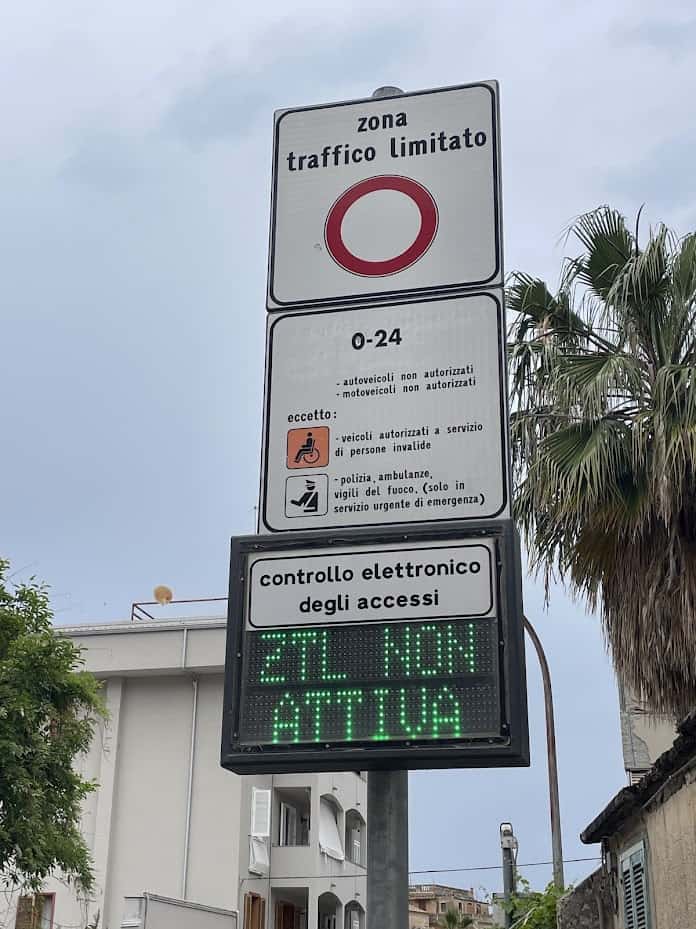
Parking becomes particularly challenging during the busiest summer periods.
If you’re staying centrally and don’t intend to explore outside Tropea, a rental car that spends several days parked may provide little benefit.
→ See my Parking in Tropea guide for the practical details and current options.
Getting Around Tropea
Once you have arrived, walking is the best way to explore most of Tropea.
The historic centre is compact, and much of its character comes from streets that are better experienced on foot.
There is one geographical complication:
Tropea is built above the sea.
The old town and beaches are separated by a significant change in level, with stairs and sloping access routes connecting them.
For most visitors this simply becomes part of the experience.
But if you have reduced mobility, are travelling with very young children or regularly pushing a stroller, it deserves consideration when choosing where to stay.
Tropea may look tiny on a map, but vertical distance matters as much as horizontal distance here.
When Is the Best Time to Visit Tropea?
For the combination of beach weather, atmosphere and manageable crowds, I particularly like the periods immediately outside peak summer.
May can be excellent for sightseeing and quieter travel, although sea temperatures are cooler and the destination is not yet operating at full summer intensity.
June is an excellent compromise. Days are long, beach weather has generally arrived and crowds are usually more manageable than later in summer.
July is hotter and busier, with Tropea firmly in summer mode.
August is peak season. Beaches, streets and restaurants become considerably busier, particularly around Ferragosto.
September is another excellent period. The sea retains much of its summer warmth while visitor numbers generally begin easing as the month progresses.
October can be rewarding for sightseeing and quieter travel, although beach weather becomes less predictable and seasonal tourism services begin winding down.
For my own style of travel, June and September provide the best overall balance.
→ Read my Best Time to Visit Tropea guide for a detailed month-by-month comparison.
In my personal experience, August in Tropea feels like a lively rush: beaches are crowded, parking is a challenge, and evenings stretch late as restaurant tables fill and music drifts through narrow streets. The town hums with holiday energy — vendors, families, and groups of friends create a festive, sometimes noisy atmosphere that’s perfect if you want bustle and nightlife.
Beaches are full of umbrellas and sunbeds, so finding a quiet spot takes planning; arriving early or reserving a lido helps. Heat in August is persistent and thick by midday, pushing most activity to dawn, dusk, and the cooler sea; expect long, languid swims and late dinners.
I find September slides into a calmer rhythm. Many day-trippers and families return home, freeing parking and reopening quiet alleys. Beaches feel roomier and the sea remains warm from summer, making swimming still delightful without the jostle.
Evenings soften — restaurants and bars relax, local life reasserts itself, and the pace becomes more leisurely and conversational. June, by contrast, is still gentle and anticipatory: pleasant warmth, easier parking, and a sense of discovery before the peak season’s intensity arrives.
How Many Days Do You Need in Tropea?
You can see Tropea’s principal sights in one day.
But I don’t think that’s the best way to experience it.
For most first-time visitors I would recommend three to four nights.
That gives you time to explore the old town without rushing, spend time at the beach, experience Tropea in the evening and make at least one excursion along the Costa degli Dei.
If you have five days or a week, Tropea becomes a base rather than simply a destination.
You can explore Capo Vaticano, visit Pizzo, discover smaller beaches or spend a day on the water without turning the trip into a race.
If you only have one day, Tropea is still worth visiting — but stay into the evening if possible.
→ See my How Many Days in Tropea guide for suggested 1, 2, 3 and 5-day itineraries.
What to Eat in Tropea
Food is one of the pleasures of travelling in Calabria.
Tropea’s most famous product is the Cipolla Rossa di Tropea Calabria IGP, the sweet red onion grown in this part of the region.
You’ll see it hanging outside shops and incorporated into numerous local dishes.
Other Calabrian foods worth seeking out include fileja, a traditional pasta shape, and ‘nduja, the spicy spreadable salume associated particularly with nearby Spilinga.
Given Tropea’s coastal position, seafood also features prominently on local menus.
And if you’re visiting Pizzo during your stay, leave room for the famous tartufo di Pizzo.
→ Read What to Eat in Tropea for the dishes and local products I think are worth trying.
When I eat out in Tropea I often order filleja with ‘nduja and other times a Tropea onion pizza — the rich, spicy ‘nduja is delicious, and the rustic pasta soaks up every drop of the sauce.
Tropea onions here are more than a tourist souvenir; locals cook them slowly to coax out sweetness—onion-topped focacce, braised with tomatoes or folded into simple omelettes—rather than just serving them raw or pickled for photo ops.
One of my most memorable meals was a sunset dinner on a tiny terrace: a bowl of filleja, a shared pizza, a jug of local red wine, and the onion’s caramelized aroma mingling with sea air — that combination still defines Tropea to me.
Tropea After Dark

One reason I recommend staying overnight rather than seeing Tropea solely as a day trip is the evening.
As the heat eases, the historic centre fills again.
Restaurants become busy, people wander through the streets and the evening passeggiata brings a completely different atmosphere from the middle of the day.
Have dinner.
Get a gelato.
Walk without an itinerary.
Return to one of the viewpoints after sunset.
Tropea is a destination where the hours after the beach are an important part of the experience.
Day Trips From Tropea
Tropea’s location makes it a useful base for exploring more of western Calabria.
One of my favourite excursions is exploring the spectacular Coast of the Gods.
Capo Vaticano is the obvious first excursion, with dramatic coastal scenery and some exceptional beaches.
Parghelia and Zambrone offer quieter sections of coastline nearby.
Farther north, Pizzo combines an attractive historic town with its famous tartufo.
To the south, Scilla makes a longer but rewarding excursion, particularly for its waterside Chianalea district.
Seasonal boat excursions can also connect the Tropea area with the Aeolian Islands, including Stromboli.
Rather than trying to fit all of these into a short stay, choose according to your interests and leave enough time to enjoy Tropea itself.
→ Read my Best Day Trips From Tropea guide for distances, transport and which excursions I think are actually worthwhile.
If I only had time for one trip from Tropea, I would choose the full day trip to the Aeolian Islands and especially for the experience of seeing the active volcano of Stromboli at night. Its constantly having small eruptions that light up the night sky, almost like red fireworks.
Explore the Costa degli Dei
Tropea makes considerably more sense when you understand the coastline around it.
The Costa degli Dei stretches through a succession of beaches, cliffs, rocky coves and coastal communities around this part of Calabria.
Tropea is its best-known destination, but it isn’t the entire story.
Parghelia, Zambrone, Santa Domenica, Riaci and Capo Vaticano all add different landscapes and experiences.
If you have a car, I recommend setting aside at least one day to explore without trying to reach a long list of predetermined stops.
This is a coastline that rewards stopping when something catches your attention.
→ Continue with my Costa degli Dei Travel Guide for a deeper exploration of the coastline around Tropea.
Tropea is beautiful, but it’s only one piece of the puzzle — visitors who never leave the cliff-top centre miss quieter spots, hidden beaches and small villages that reveal Calabria’s character.
I’ve explored the Costa degli Dei by boat and on foot, and I prefer lesser-known stretches like the rocky coves around Capo Vaticano and the long, sandy run toward Zambrone — places with clearer water, fewer people, and a more authentic local feel.
These areas show how the coast functions beyond souvenir shops and sunset photos; I’ll save the exact bays, lidos and access tips for the Costa degli Dei cluster, but a short detour off the main tourist trail will definitely change your Tropea experience.
What First-Time Visitors Often Get Wrong About Tropea
Tropea is easy to visit, but there are several things I think first-time visitors commonly misunderstand.
Trying to see Tropea only as a checklist
The town doesn’t require days of conventional sightseeing.
The mistake is assuming that means you only need two hours.
Tropea’s appeal comes from spending time there — beach, old town, sunset, food and evening atmosphere — rather than accumulating attractions.
Visiting only in the middle of the day
If you arrive with the day-trip crowds and leave before evening, you experience Tropea at one of its busiest times and miss one of its best.
If possible, see the town early in the morning or stay after sunset.
Assuming you need a car
You don’t need one for Tropea itself.
Decide what you actually want to explore before automatically hiring one for the entire trip.
Underestimating August
August on the Calabrian coast is busy.
If quiet beaches and easy parking are important to you and your dates are flexible, consider June or September instead.
Seeing Tropea but ignoring the surrounding coast
Tropea may be the headline destination, but the Costa degli Dei is part of what makes staying here worthwhile.
On my observation, many mistakes visitors make are simple and avoidable: eg. arriving at the wrong time (when parking is impossible and heat is at its peak), driving into narrow lanes meant for residents, or booking accommodation without realising how steep the hill is.
Also trying to visit too many beaches in one day or eating only on the main tourist street leaves you exhausted and hungry for something genuine. And don’t trust Google Maps’ travel times to tell the whole story — winding coastal roads, single-track lanes, and seasonal parking limits add minutes or even hours.
Is Tropea Suitable for Families?
Tropea can work very well for families because the town and beach don’t require completely separate excursions.
The main consideration is the terrain.
The historic centre sits well above the sea, and moving between the two involves stairs or sloping routes.
Families travelling with very young children or strollers should therefore pay particular attention to accommodation location.
Otherwise, the ability to combine swimming, restaurants and evening walks without spending the entire holiday in a car is a significant advantage.
Is Tropea Good for Couples?
Very much so.
Tropea suits couples particularly well because you don’t need to fill every day with organised activities.
A morning exploring, several hours at the beach, a late lunch and an evening walking through the old town can be an entirely satisfying day.
Sunset over the Tyrrhenian Sea doesn’t hurt either.
Is Tropea Expensive?
Tropea is no longer an unknown budget destination, and prices rise substantially during peak summer.
Accommodation is where season can make the biggest difference.
Travelling in June or September rather than August can potentially give you a better experience as well as better value.
Restaurants range from casual options to more expensive dining, while beaches include both free sections and paid lidos.
Rather than thinking of Tropea as either cheap or expensive, I would think of it as highly seasonal.
When you travel matters.
Is Tropea Too Touristy?
This depends heavily on when you visit.
Tropea has become one of Calabria’s best-known destinations, so describing it as an undiscovered hidden gem would be misleading.
In August, it is unquestionably touristy.
But tourism isn’t evenly distributed throughout the year or even throughout the day.
Visit outside peak summer, walk through the historic centre early in the morning or explore beyond the most obvious streets and you can have a very different experience.
I don’t think Tropea’s popularity is a reason not to visit.
I think it is a reason to plan the visit intelligently.
In the years since my first visit to Tropea in 2006, I have seen many changes, some not so good and others very positive. Since Covid the number of visitors has increased dramatically and this has brought funds which have been used to improve the Tropea infrastructure. Roads are much better and the piazza’s have been totally upgraded and beautified.
The down side with the increase in tourism in Tropea is that parking for locals and residents has become more difficult, but I have to add that if you visit outside of July and August Tropea still retains all the charm and atmosphere that I first experienced back in 2006. I would personally advise that August, especially around Feragosto in the middle of the month should absolutely be avoided.
Practical Tips for Your First Trip to Tropea
A few simple decisions can make a considerable difference.
Choose your month carefully. June and September are particularly attractive if you want beach weather without the absolute peak of August.
Check your accommodation location on a map. In Tropea, elevation matters as much as distance.
Investigate parking before arriving if you’re driving. The historic centre has restricted traffic arrangements, and Tropea’s municipality continues to regulate ZTL access in 2026.
Wear comfortable shoes. Historic paving, stairs and slopes are part of exploring the town.
Don’t overschedule your days. Tropea works best when you leave room for the beach, long meals and spontaneous stops.
Verify transport schedules shortly before travelling. Rail, bus and boat services can be seasonal.
Spend at least one evening in town. Don’t judge Tropea solely from a midday day trip.
Explore beyond Tropea. Even one day along the Costa degli Dei adds enormously to the experience.
How I Would Plan a First Trip to Tropea
If I were planning a first visit, I would aim for three or four nights, preferably in June or September if my dates were flexible.
I would stay within walking distance of the historic centre.
I wouldn’t rent a car simply to explore Tropea.
The first day would be deliberately unambitious: old town, viewpoints, Santa Maria dell’Isola, beach and dinner.
Then I would use another day to explore the coastline towards Capo Vaticano.
The remaining time could be divided between another beach day, Pizzo, a boat trip or simply spending more time in Tropea.
If Tropea formed part of a longer Calabria road trip, I would structure things differently — but I would still resist the temptation to arrive at lunchtime, photograph Santa Maria dell’Isola and leave three hours later.
There is considerably more value in staying.
Frequently Asked Questions About Tropea
Is Tropea worth visiting?
Yes. Tropea is particularly worthwhile if you want to combine a historic coastal town with beaches, food and exploration of the Costa degli Dei.
How many days do you need in Tropea?
Three to four nights is a good first stay. You can see the principal sights in one day, but staying longer allows you to experience the beaches, evenings and surrounding coastline.
Can you visit Tropea without a car?
Yes. Tropea is walkable, has its own railway station and several beaches can be reached on foot. A car is much more useful for exploring beyond the town.
What is the nearest airport to Tropea?
Lamezia Terme International Airport is the most convenient major airport for most travellers visiting Tropea.
What is the best time to visit Tropea?
For my preferred balance of beach weather and lower crowds, June and September are excellent choices. July and especially August are considerably busier.
Is Tropea walkable?
Yes, but remember that the historic centre sits approximately 60 metres above the sea. Stairs and slopes are unavoidable when moving between the old town and beaches.
Is Tropea good for beaches?
Yes. Several beaches are directly accessible from the town, while the wider Costa degli Dei provides many more options.
Can you see Stromboli from Tropea?
In clear conditions, Stromboli can be visible across the Tyrrhenian Sea from Tropea and other viewpoints along the Costa degli Dei.
Should I stay in Tropea or Capo Vaticano?
For a first visit, I generally recommend Tropea if you value restaurants, evening atmosphere, walkability and public transport. Capo Vaticano may suit you better if beaches and a quieter resort-style stay are the priority.
Is one day enough for Tropea?
It is enough to see the main landmarks, but I don’t think it is enough to experience Tropea properly. If possible, stay at least two nights and preferably three or four.
My Final Thoughts on Visiting Tropea
Tropea’s popularity has grown considerably, and I don’t think there is any value in pretending it is still an undiscovered corner of Italy.
It isn’t.
Visit in August and you will certainly know other people have discovered it.
But popularity and quality aren’t mutually exclusive.
Tropea remains one of the most striking coastal towns in Calabria because the fundamentals that made it special haven’t disappeared.
The historic centre still rises above the Tyrrhenian Sea.
The beaches are still immediately beneath the cliffs.
Santa Maria dell’Isola still occupies its extraordinary position above the water.
And on a clear evening, you can still stand at a viewpoint and watch the sun disappear towards the Aeolian Islands.
What makes Tropea particularly worthwhile for me, however, is what surrounds it.
Once you start exploring the Costa degli Dei, Tropea becomes more than a beautiful town to photograph. It becomes a practical and enjoyable base for discovering this part of Calabria.
So my advice for a first trip is simple.
Don’t rush it.
Give Tropea enough time to experience it early in the morning, at the beach, around sunset and after dark.
Explore beyond the old town.
And leave some space in your itinerary for the things you didn’t plan.
That slower approach is, for me, the best way to experience Tropea.
Continue Planning Your Tropea Trip
If Tropea is just one stop on a wider journey, my Southern Italy Travel Guide will help you plan an itinerary through Calabria, Sicily, Puglia, Basilicata and Campania, with practical advice and destination ideas from across the south.
This guide is the starting point. Use these more detailed guides when you’re ready to plan individual parts of the trip:
Things to See and Do in Tropea — sights, old town, viewpoints and experiences
Best Beaches in Tropea — individual beaches, access and which ones to choose
Where to Stay in Tropea — areas and accommodation (Coming soon)
How to Get to Tropea — airport, train, driving and transfers (Coming soon)
Tropea Without a Car — walking, public transport and car-free day trips (Coming soon)
Parking in Tropea — where to leave your car and what to know about the ZTL (Coming soon)
Best Time to Visit Tropea — seasons and month-by-month planning (Coming soon)
How Many Days in Tropea — suggested itineraries (Coming soon)
What to Eat in Tropea — local food and Calabrian specialities (Coming soon)
Best Day Trips From Tropea — Capo Vaticano, Pizzo, Scilla and beyond (Coming soon)
Costa degli Dei Travel Guide — explore the coastline surrounding Tropea