Scilla Travel Guide: Best Things to Do, Beaches & Essential Travel Tips
If you’re looking for a beautiful coastal town in Southern Italy that still feels authentic, Scilla should be high on your list.
I first visited Scilla back in 2006 during my 6 week stay in Tropea, where I was studying Italian, at a local Italian Language school for foreigners.
I arrived in Scilla that day by train from Tropea, with some local tips given by my Calabrian Italian teacher. It was the end of May, and still not that busy, so it was easy for me to find a quaint B & B to spend the night.
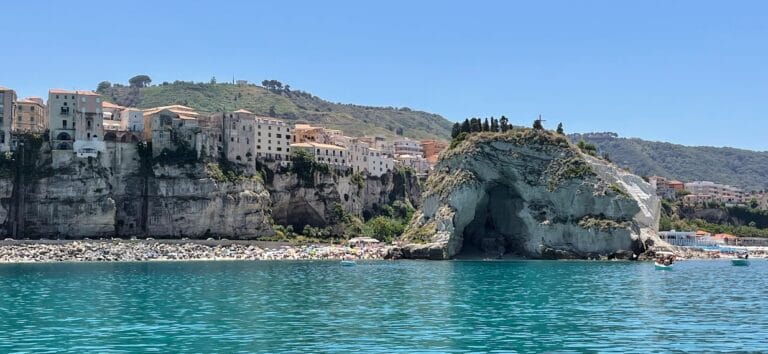
Perched on the edge of the Strait of Messina, this picturesque fishing village combines colourful waterfront houses, crystal-clear water, a historic castle overlooking the sea and a slower pace of life that can be difficult to find in Italy’s more famous destinations.
While places like Tropea often steal the spotlight, Scilla offers a completely different experience. It’s quieter, more compact and deeply connected to local traditions, making it an excellent stop on a Calabria itinerary between Tropea, Pizzo, Scilla and Reggio Calabria, or a relaxing destination in its own right.
Whether you’re planning a day trip or considering staying overnight, this Scilla travel guide covers everything you need to know, including the best things to do, where to stay, how to get there, the best beaches and practical travel tips to help you make the most of your visit.
| ❤️ Why Visit? | 🕒 Time Needed | 👥 Best For | ⭐ Don’t Miss |
|---|---|---|---|
| Authentic fishing village with beautiful scenery, history and crystal-clear water. | 1 full day or 1 night for the best experience. | Couples, families, singles, photographers, slow travellers and seafood lovers. | Sunset in Chianalea overlooking the Strait of Messina. |
Scilla at a Glance
Why visit?
Scilla is one of Calabria’s most picturesque coastal towns, combining historic charm, crystal-clear water and an authentic fishing village atmosphere.
How long to stay?
A full day is enough to experience the highlights, although staying overnight allows you to enjoy Scilla after the day-trippers have left.
Who is it best for?
Travellers looking for authentic Southern Italy, photographers, couples and anyone wanting a quieter alternative to Italy’s more crowded coastal destinations.
Standout experience
Watching the sunset from Chianalea while enjoying fresh seafood overlooking the Strait of Messina.
Quick Facts About Scilla
| Location | Southern Calabria, overlooking the Strait of Messina |
|---|---|
| Best for | Coastal scenery, photography, seafood and relaxed village atmosphere |
| Time Needed | Half day to 1 night |
| Best Time to Visit | May–June and September–October |
| Nearest Airport | Reggio Calabria Airport (about 30 minutes by car) |
| Nearest Train Station | Scilla Station (10–15 minute walk to the historic centre) |
| Suitable for Families? | Yes |
| Need a Car? | No, although it’s useful if exploring more of Calabria |
Suggested Walking Route: If you’re visiting Scilla for the first time, this walking route covers the town’s main highlights in around three to four hours at a relaxed pace, with plenty of opportunities to stop for photos, a swim or lunch overlooking the sea.
Is Scilla Worth Visiting?
Absolutely—but whether it’s the right destination for you depends on the type of Italian holiday you’re hoping to experience.
Scilla isn’t packed with famous landmarks or a long list of attractions. Instead, its appeal lies in its atmosphere. It’s somewhere to slow down, wander through narrow streets, enjoy fresh seafood overlooking the water and watch local fishing boats return to the harbour as the sun begins to set.
One of the things I enjoy most about Scilla is that it still feels lived in. Rather than being shaped entirely around tourism, daily life continues much as it always has, giving visitors a glimpse of authentic coastal Calabria.
If you enjoy discovering smaller towns with character, beautiful scenery and a relaxed pace, Scilla is well worth including in your Southern Italy itinerary.
However, if you’re looking for lively nightlife, luxury shopping or dozens of major attractions, you’ll probably find places such as Tropea or the Amalfi Coast a better fit.

My Experience Visiting Scilla
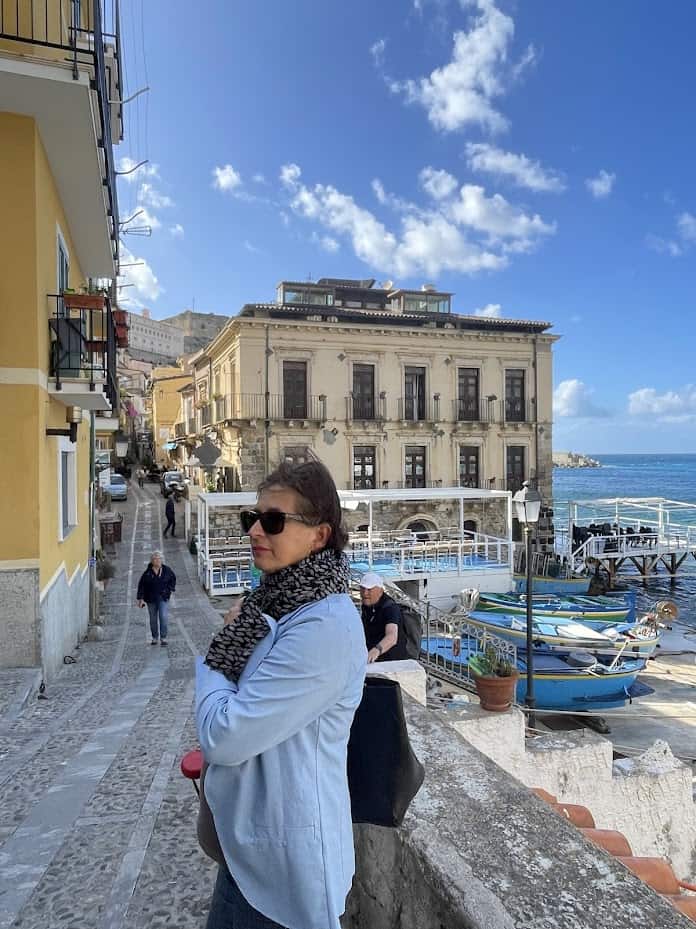
…..Fast forward to my latest visit which was with some friends visiting from Australia in April 2026. This time it was cooler, as can be seen by the jackets we were wearing and the waterfront restaurants in Chianalea were closed.
One of the things I noticed almost immediately about Scilla on my first trip, was how different it felt from some of Southern Italy’s better-known coastal towns such as Tropea or Capo Vaticano.
I saw fishing boats come and go throughout the day, local families gather along the waterfront in the evenings and many visitors simply slow down rather than rushing from one attraction to the next.
What stayed with me most was the atmosphere in Scilla, especially in the Chianalea area. Sitting beside the water, watching fishermen preparing their boats while looking across to Sicily, I found myself really appreciating the slower pace that Calabria does so well.
If you’re expecting a destination packed with famous attractions, Scilla may feel quite small. But if you enjoy authentic coastal towns with genuine character, beautiful scenery and a relaxed rhythm, I think you’ll find it one of Calabria’s most rewarding places to visit.
Where Is Scilla?
Scilla is located on the southwestern coast of Calabria, overlooking the Strait of Messina and directly facing Sicily.
Its position makes it one of the first coastal towns many travellers reach after arriving in Reggio Calabria, and it’s conveniently located along the main railway line that connects much of the Tyrrhenian coast.
Its location also makes it easy to combine with Reggio Calabria, while travellers heading north often continue towards Pizzo, Tropea and the Coast of the Gods.
Although relatively small, Scilla makes an excellent base for exploring this part of Calabria.
Distance from Reggio Calabria
Scilla is approximately 25 kilometres north of Reggio Calabria.
By car, the journey usually takes around 30 minutes.
Regular regional trains also connect the two towns, making Scilla one of the easiest destinations in Calabria to visit without hiring a car.
Distance from Tropea
Tropea is around 95 kilometres north of Scilla.
Driving typically takes between 1½ and 2 hours depending on traffic, while train connections are straightforward and often surprisingly convenient.
If you’re planning a Calabria road trip, many travellers combine both destinations as part of the same itinerary.
The Story Behind Scilla
Scilla isn’t just a beautiful seaside town—it also has one of the oldest legends in Greek mythology attached to it.
According to Homer’s Odyssey, the sea monster Scylla lived in the narrow waters opposite another monster, Charybdis, on the Sicilian side of the Strait of Messina. Sailors attempting to navigate between them faced enormous danger, giving rise to the well-known expression “between Scylla and Charybdis.”
While today’s Scilla is peaceful and welcoming, the dramatic cliffs overlooking the Strait make it easy to understand how ancient sailors imagined mythical creatures living here.
The imposing Castello Ruffo, perched high above the coastline, only adds to the town’s dramatic setting and reminds visitors of Scilla’s long and fascinating history.
Best Things to Do in Scilla
Although Scilla is compact, that’s part of its charm. Most of its highlights can easily be explored on foot, allowing you to spend less time rushing between attractions and more time enjoying the atmosphere.
Rather than trying to tick off a list of sights, I’d recommend slowing down and taking time to appreciate what makes Scilla unique.
Wander Through Chianalea
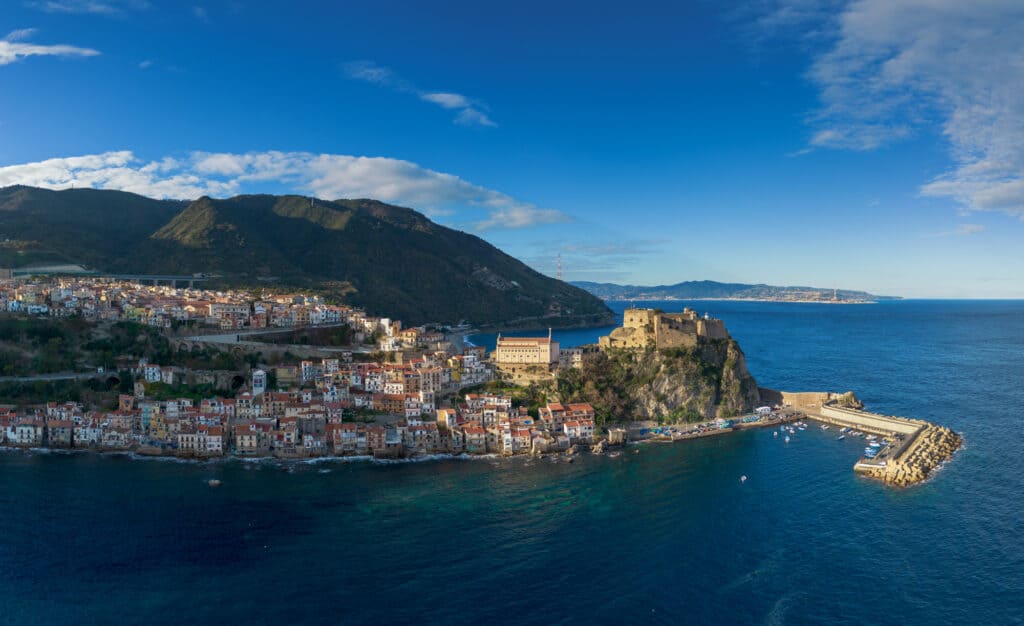
Often described as one of Italy’s most beautiful fishing villages, Chianalea is definitely the highlight of Scilla.
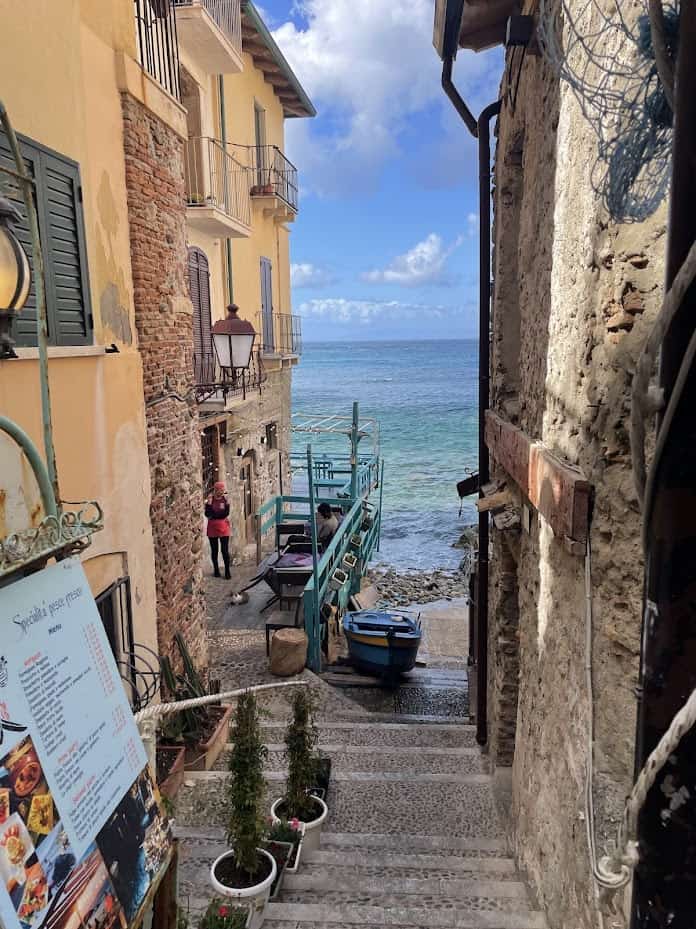
Its narrow streets weave between centuries-old houses built almost directly above the sea, with small fishing boats moored just metres from restaurant terraces.
Unlike many picturesque villages that feel carefully preserved for tourists, Chianalea remains a working neighbourhood where local life continues much as it always has.
Take your time exploring its lanes, stopping occasionally to admire the colourful balconies, tiny stairways and uninterrupted sea views.
For photographers, early morning and late afternoon provide particularly beautiful light.
Visit Castello Ruffo
Standing high above the town, Castello Ruffo dominates Scilla’s skyline.
The fortress has watched over this stretch of coastline for centuries and offers some of the finest panoramic views in the region.
From the castle walls you can enjoy spectacular views across the Strait of Messina towards Sicily, while looking back over the rooftops of Chianalea and Marina Grande below.
From my experience I would allow at least an hour to explore the castle and enjoy the surrounding viewpoints.
Relax on Marina Grande Beach
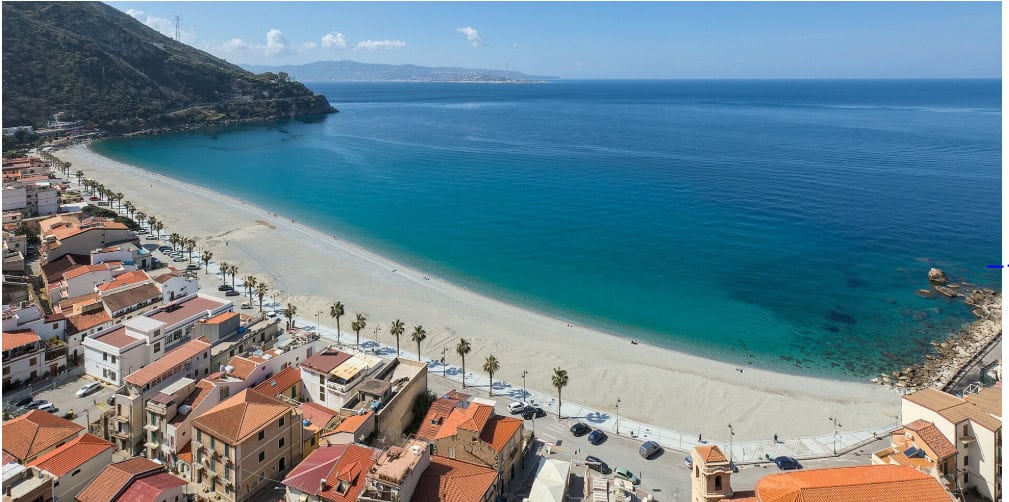
Marina Grande is Scilla’s main beach and one of the easiest places to spend a relaxing afternoon.
The wide stretch of pebbles and clear blue water attracts both locals and visitors during summer, while the promenade behind the beach offers cafés, restaurants and gelato shops just a short walk away.
Thanks to the clarity of the water, it’s also a lovely place for swimming, particularly during the warmer months.
Walk Along the Seafront
One of the simplest pleasures in Scilla is strolling along the lungomare.
The waterfront promenade connects different parts of the town and provides beautiful views across the Strait of Messina.
On clear days you can even see Sicily appearing remarkably close across the water, reminding you just how strategically positioned Scilla has been throughout history.
As evening approaches, the atmosphere changes completely as locals gather for an evening walk, children play along the promenade and restaurants begin filling with diners.
If you’re only spending a few hours in Scilla, I’d recommend making time for this walk before dinner.
Watch the Sunset Over the Strait of Messina
Although Calabria has many spectacular coastal viewpoints, sunsets in Scilla feel particularly memorable.
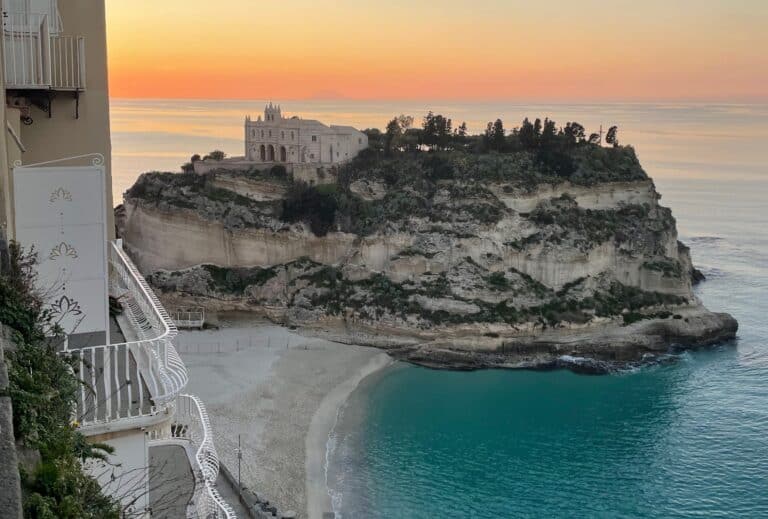
As the light begins to fade, the castle, fishing boats and colourful waterfront buildings create one of the region’s most photogenic scenes.
Depending on the weather conditions, the mountains of Sicily often become silhouetted against the evening sky, producing views that are difficult to forget.
For photography, this is one of the best times to explore both Marina Grande and Chianalea.
Enjoy Fresh Seafood
Being a historic fishing village, seafood naturally plays an important role in Scilla’s local cuisine.
Many restaurants specialise in freshly caught swordfish, a species that has long been associated with this stretch of coastline, along with other traditional Calabrian seafood dishes.
Rather than choosing the busiest restaurant, I’d suggest wandering through Chianalea and selecting somewhere overlooking the water. The setting often becomes just as memorable as the meal itself.
Slow Down and Soak Up the Atmosphere
Perhaps the best thing to do in Scilla isn’t an attraction at all.
It’s simply slowing down.
Spend time sitting beside the water with a coffee, watching fishermen prepare their boats, exploring quiet side streets or enjoying an evening aperitivo as the sun sets over the Strait of Messina.
For me, this slower pace is exactly what makes places like Scilla so rewarding to visit.
Unlike destinations where every hour feels scheduled, Scilla invites you to pause, look around and simply enjoy being there.
Best Beaches in Scilla
Although Scilla isn’t known for having a long coastline of beaches like Tropea or Capo Vaticano, it does offer several attractive places to swim and enjoy the sea.
What makes Scilla different is the setting. Instead of dramatic cliffs or long stretches of white sand, you’ll find clear water framed by colourful waterfront buildings, a historic castle and views across the Strait of Messina towards Sicily.
If you’re already exploring Calabria’s coastline, Scilla provides a refreshing change of pace and is well worth including on your itinerary.
For a broader look at the region’s coastline, be sure to check out my guide to the best beaches in Calabria.
Marina Grande Beach
Marina Grande is Scilla’s main beach and the easiest place to spend a few relaxing hours.
The beach is made up mainly of smooth pebbles rather than sand, so bringing suitable footwear can make entering the water more comfortable.
What it lacks in soft sand, however, it makes up for with exceptionally clear water and one of Calabria’s most scenic backdrops.
Behind the beach you’ll find cafés, restaurants and gelaterias, making it easy to combine a swim with lunch or an evening aperitivo overlooking the sea.
Small Beaches Around Chianalea
As you explore Chianalea you’ll discover several tiny access points to the sea tucked between the old fishermen’s houses.
These aren’t traditional beaches where you’ll spend an entire afternoon, but they’re perfect if you’d simply like a quick swim in an unforgettable setting.
The water here is incredibly clear, and on calm days it’s difficult to resist stopping for a swim while wandering through the village.
Is the Water Good for Swimming?
One of the highlights of visiting Scilla is the quality of the water.
The sea is generally clean, clear and inviting throughout the warmer months, making swimming one of the town’s biggest attractions.
As with much of Calabria, sea conditions can change depending on the weather, so always pay attention to local conditions before entering the water.
How Long Should You Spend in Scilla?
One of the questions I often see travellers asking is whether Scilla is simply a day trip or somewhere worth staying overnight.
The answer depends on how you like to travel.
If you’re planning a week-long holiday in Calabria, I think Scilla works particularly well when combined with Gerace, Reggio Calabria, Tropea and Pizzo, giving you a varied mix of historic towns, coastal scenery and beautiful beaches.
Visiting Scilla as a Day Trip
If you’re travelling through Calabria by car or train, a full day gives you enough time to explore the historic streets, visit Castello Ruffo, enjoy lunch overlooking the water and spend a few hours at the beach.
For many visitors, this will be enough to experience the highlights.
Staying One Night
Personally, I think staying overnight allows you to experience a different side of Scilla.
Once the day visitors leave, the pace slows noticeably.
The waterfront becomes quieter, restaurants fill with local families and the evening atmosphere feels far more relaxed than during the busiest part of the day.
If your itinerary allows, I’d recommend spending at least one night here.
Staying Longer
Scilla also works well as a base for exploring the southern part of Calabria.
Its excellent train connections and relatively short distance from Reggio Calabria make it convenient for travellers who prefer not to change accommodation every day.
Where to Stay in Scilla
Choosing where to stay depends largely on the type of experience you’re looking for.
Although Scilla is compact, each area has its own character.
Chianalea
If atmosphere is your priority, Chianalea is hard to beat.
Staying within the historic fishing quarter allows you to experience the village early in the morning and again in the evening after most visitors have left.
Accommodation here is generally smaller and more intimate, adding to the area’s charm.
Near Marina Grande
If easy beach access is more important, accommodation around Marina Grande is an excellent choice.
You’ll be close to restaurants, cafés, the promenade and the main swimming area while still being within easy walking distance of Chianalea.
Is Scilla a Good Base?
For travellers exploring the southern part of Calabria, Scilla can make a very pleasant base.
Its relaxed atmosphere, beautiful setting and convenient transport connections mean you can enjoy quieter evenings while still having easy access to nearby destinations.
If your plans include exploring more of Calabria, however, I’d still recommend moving between several destinations rather than staying in just one place for your entire trip.
However, if you want to experience more of Calabria, I’d recommend dividing your stay between Scilla, Tropea and perhaps Pizzo, as each destination offers a very different atmosphere.
How to Get to Scilla
Despite feeling like a small coastal village, Scilla is surprisingly easy to reach.
Whether you’re driving through Calabria or relying on public transport, visiting is relatively straightforward.
By Car
Driving offers the greatest flexibility, particularly if you’re planning to explore several destinations throughout Calabria.
Scilla is conveniently located just off the A2 motorway and is easy to include as part of a wider road trip.
Parking is available near the town, although spaces can become limited during the busiest summer months.
For more information about planning your journey through the region, see my Calabria Road Trip Guide.
By Train
Scilla is one of the easiest towns in Calabria to reach by train.
The railway station is within walking distance of the historic centre, making it an excellent option for travellers who prefer not to hire a car.
Regional services connect Scilla with both Reggio Calabria and Tropea, allowing you to explore this part of the coastline without driving.
By Air
The nearest airport is Reggio Calabria Airport, with additional options available via Lamezia Terme Airport, depending on your itinerary.
From either airport you can continue by train or hire a car to reach Scilla.
Parking Tips
If you’re visiting during July or August, arrive early if possible.
Parking spaces closest to the historic centre can fill quickly during peak season, particularly on weekends.
Outside the busiest months, finding parking is generally much easier.
Best Time to Visit Scilla
Scilla is one of those destinations that changes noticeably with the seasons, so the best time to visit really depends on the type of holiday you’re planning.
Unlike larger tourist destinations, its appeal isn’t based on a packed calendar of attractions or events. Instead, it’s the atmosphere, scenery and relaxed pace that make it special.
Spring (April to June)
In my opinion, spring is one of the best times to visit Scilla.
The weather is generally warm without the intense summer heat, the streets are quieter and you’ll have more opportunities to enjoy the waterfront without large crowds.
If you enjoy photography, walking and exploring at a relaxed pace, this is an excellent season to visit.
Summer (July and August)
Summer brings warm temperatures and lively beaches.
Restaurants and cafés are full, the promenade becomes busy during the evenings and the town has a vibrant atmosphere.
The trade-off is that accommodation prices are generally higher and parking becomes more difficult.
If you’re visiting during peak season, I’d recommend booking accommodation well in advance.
Autumn (September and October)
For many travellers, early autumn offers an ideal balance.
The sea is still warm enough for swimming, temperatures are comfortable and visitor numbers begin to decline after the summer holidays.
It’s a wonderful time to experience Scilla without feeling rushed.
Winter (November to March)
Winter offers a completely different experience.
While some tourist businesses reduce their opening hours, Scilla returns to being primarily a working coastal town.
If your goal is sightseeing rather than swimming, you’ll enjoy a quieter and more authentic atmosphere.
Suggested Scilla Itinerary
Here’s how I’d spend my time.
Half-Day Visit
- Explore Chianalea
- Walk along the waterfront
- Visit Castello Ruffo
- Enjoy lunch overlooking the sea
This itinerary fits perfectly into a wider journey through Calabria, particularly if you’re travelling between Tropea, Pizzo, Scilla and Reggio Calabria.
Full-Day Visit
Morning
Explore Chianalea before it becomes busy.
Late Morning
Visit Castello Ruffo.
Lunch
Choose a waterfront restaurant specialising in local seafood.
Afternoon
Relax on Marina Grande Beach or enjoy a swim.
Evening
Finish with an aperitivo while watching the sunset across the Strait of Messina.
For me, this is when Scilla is at its most enjoyable.
Practical Travel Tips
A few simple tips can make your visit even more enjoyable.
- Wear comfortable walking shoes as many streets are paved with uneven stone.
- If you plan to swim, consider bringing reef or water shoes as the beaches are mostly pebbled.
- Visit Chianalea early in the morning or later in the afternoon for the best light and a quieter atmosphere.
- During July and August, arrive early if driving as parking can become extremely limited.
- Allow time to simply wander rather than rushing around.
- Carry some cash, as smaller businesses may not always accept cards.
- If you’re travelling by train, check return times in advance, particularly outside the peak tourist season.
Things to Know Before You Visit Scilla
Although Scilla is easy to explore, a few things may surprise first-time visitors.
The historic streets are narrow and uneven in places, so comfortable footwear is a much better choice than sandals or heels.
If you’re planning to swim, remember that most beaches are pebbled rather than sandy. Water shoes can make getting in and out of the sea much more comfortable.
Parking close to Chianalea is limited during the busiest summer months, so arriving earlier in the day usually makes things much easier.
One thing I would definitely recommend is slowing your pace. Scilla isn’t somewhere to rush through with a checklist.
Some of my favourite moments simply came from sitting beside the water, wandering through quiet streets and enjoying the atmosphere as the day gradually changed into evening.
Finally, if you’re travelling by train, check return services before setting out, particularly outside the main tourist season when timetables may be less frequent.
Scilla or Tropea?
This is one of the questions I hear most often.
Although both are among Calabria’s most beautiful coastal towns, they offer very different experiences.
Tropea is larger, busier and attracts significantly more visitors.
Its dramatic clifftop setting, lively historic centre and famous beaches make it one of Calabria’s best-known destinations.
Scilla, on the other hand, feels quieter and more intimate.
Rather than spending your day moving between attractions, you’ll probably find yourself slowing down, wandering through Chianalea, enjoying long lunches by the water and watching local life unfold around you.
If it’s your first visit to Calabria and you have enough time, I’d recommend visiting both.
Each offers something quite different, and together they provide a wonderful introduction to Calabria’s coastline.
Frequently Asked Questions
Is Scilla worth visiting?
Yes. If you enjoy picturesque coastal towns, authentic local atmosphere and beautiful scenery, Scilla is one of Calabria’s most rewarding destinations.
Can you visit Scilla as a day trip?
Absolutely.
Many visitors arrive by train or car from Reggio Calabria or Tropea and comfortably explore the town in a day.
However, staying overnight allows you to experience Scilla after most day visitors have left.
What is Scilla famous for?
Scilla is best known for its beautiful fishing district of Chianalea, Castello Ruffo, crystal-clear water and spectacular views across the Strait of Messina.
It’s also closely connected to Greek mythology, where Scylla was said to dwell along this stretch of coastline.
Does Scilla have good beaches?
Yes.
While the beaches are mostly pebbled rather than sandy, the water is exceptionally clear and ideal for swimming during the warmer months.
Is Scilla easy to reach?
Yes.
Scilla is easily accessible by both train and car, making it one of Calabria’s most convenient coastal destinations to visit.
How many days do you need in Scilla?
One full day is enough to experience the main highlights.
However, spending one night allows you to enjoy the relaxed evening atmosphere that many day visitors miss.
Is Scilla Right for You?
You’ll probably love Scilla if you:
✔ Enjoy authentic Italian villages rather than busy tourist resorts.
✔ Appreciate beautiful coastal scenery and photography.
✔ Like slower travel with time to wander and relax.
✔ Enjoy seafood and waterfront dining.
✔ Prefer destinations with local character over luxury shopping and nightlife.
Scilla may not be the best choice if you:
✘ Want a lively nightlife scene.
✘ Prefer long sandy beaches.
✘ Are looking for a destination packed with major attractions and museums.
✘ Have only a few hours and want to see as many sights as possible.
For many travellers, Scilla works best when combined with destinations such as Tropea, Pizzo or Reggio Calabria as part of a wider Calabria itinerary.
Final Thoughts
Scilla may not be Calabria’s largest destination, but that’s precisely what makes it so appealing.
Rather than trying to compete with larger resort towns, it offers something increasingly difficult to find: authenticity.
Whether you’re wandering through the narrow lanes of Chianalea, enjoying fresh seafood beside the water or watching the sun disappear behind Sicily, Scilla encourages you to slow down and appreciate the simple pleasures of travelling.
For me, that’s one of the reasons it deserves a place on almost every Calabria itinerary. Scilla also combines particularly well with some of Calabria’s most rewarding destinations.
You could spend a few days exploring the beaches of Tropea, enjoy the historic centre and famous tartufo in Pizzo, discover the spectacular hilltop town of Gerace, or continue south to Reggio Calabria for its seafront promenade and renowned archaeological museum.
Together, these destinations showcase the remarkable variety that makes Calabria such a rewarding region to explore.
To help you plan the rest of your trip, be sure to explore my Calabria Travel Guide, where you’ll find more destination inspiration, practical travel advice and suggested itineraries for discovering one of Italy’s most underrated regions.
Additional Resources: Scilla Tourist Information